
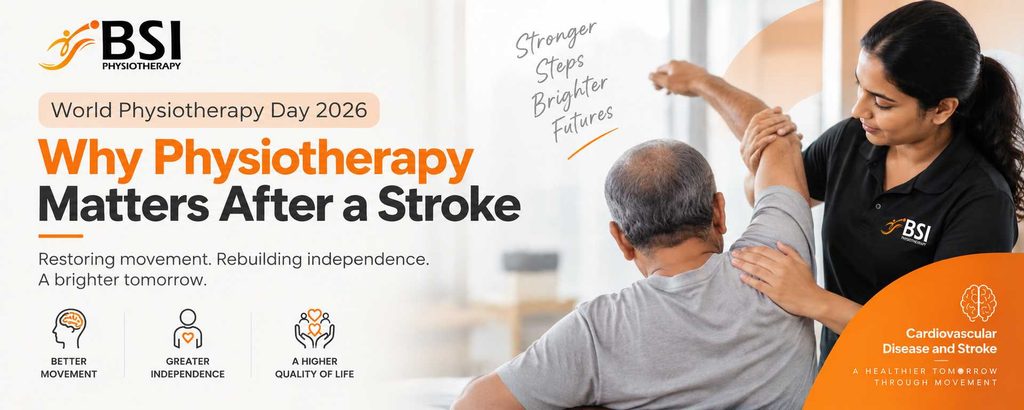
A stroke can change a person’s life within minutes. It may affect movement, balance, coordination, speech, independence, and the ability to perform everyday activities. While emergency medical treatment is critical during the initial stage, recovery does not end after hospital discharge. Stroke rehabilitation is an ongoing process, and physiotherapy plays an important role in helping survivors regain movement, function, and confidence.
On World Physiotherapy Day 2026, the focus on cardiovascular disease and stroke is an opportunity to understand how physiotherapy can contribute to recovery after stroke and support long-term physical health.
For stroke survivors and their families, understanding what physiotherapy involves and when rehabilitation should begin, can make the recovery journey more structured and effective.
What Is a Stroke?
A stroke occurs when the blood supply to part of the brain is interrupted or when a blood vessel in the brain ruptures. Without adequate oxygen and nutrients, brain cells can become damaged.
The two major types of stroke are:
- Ischaemic stroke: Caused by a blood clot or blockage that reduces blood flow to the brain.
- Haemorrhagic stroke: Occurs when a blood vessel ruptures and causes bleeding in or around the brain.
The effects of stroke depend on the area and extent of brain injury. Some people may experience mild weakness, while others may have significant difficulties with walking, balance, coordination, or using one side of the body.
How Can Stroke Affect Movement?
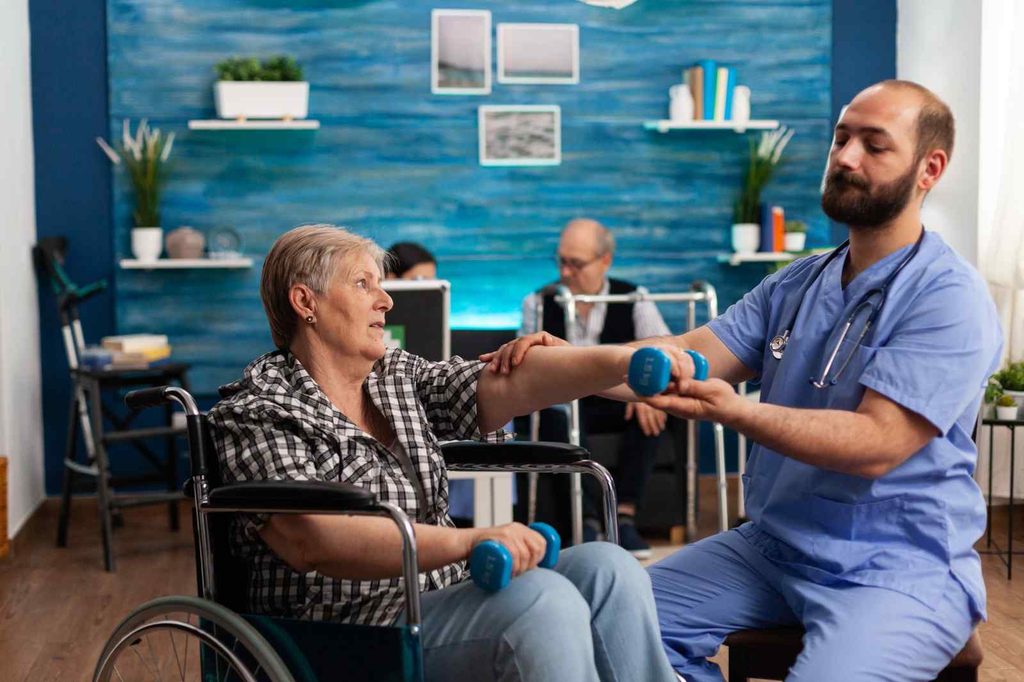
Stroke can affect the brain’s ability to control muscles and coordinate movement. Common physical problems include:
- Weakness or paralysis, often affecting one side of the body
- Difficulty walking or climbing stairs
- Poor balance and increased risk of falls
- Reduced coordination
- Muscle stiffness or spasticity
- Changes in posture
- Reduced joint mobility
- Difficulty using the arm or hand
- Reduced endurance and physical activity
- Difficulty performing daily activities independently
These challenges can contribute to reduced confidence and physical inactivity. Without appropriate rehabilitation, some movement limitations may persist or become more difficult to manage.
Why Is Physiotherapy Important After a Stroke?
Physiotherapy after stroke focuses on restoring functional movement and helping individuals become as independent as possible.
A physiotherapist evaluates the person’s strength, balance, mobility, coordination, walking pattern, joint movement, muscle tone, and functional abilities. Based on this assessment, rehabilitation is tailored to the individual’s needs, stage of recovery, and goals.
1. Improving Strength and Movement
Weakness is one of the most common physical consequences of stroke. Physiotherapy may include carefully progressed exercises designed to improve muscle activation, strength, and control.
Rather than simply exercising the unaffected side, rehabilitation aims to encourage appropriate use of the affected limbs while considering safety and fatigue.
2. Retraining Walking
Walking may become slow, unstable, or asymmetrical after a stroke.
A physiotherapist can work on:
- Sitting-to-standing transfers
- Weight shifting
- Step training
- Walking practice
- Balance during walking
- Stair negotiation
- Lower-limb strength
- Gait efficiency
The objective is not just to help someone walk inside the clinic but to improve their ability to move safely in real-life environments.
3. Improving Balance and Reducing Falls
Balance problems can make everyday activities such as standing, turning, bathing, or walking outdoors challenging.
Stroke rehabilitation may include progressive balance exercises, functional movement practice, and strategies to improve safety during daily activities.
Fall prevention is particularly important because a fall can lead to further injury, fear of movement, and reduced activity.
4. Managing Muscle Stiffness and Spasticity
Some stroke survivors develop increased muscle tone or spasticity. This can make movement difficult and may affect walking, reaching, dressing, or other activities.
Physiotherapy can help maintain joint mobility, encourage functional movement, strengthen appropriate muscle groups, and develop strategies to manage movement limitations.
Spasticity management may require collaboration between physiotherapists, physicians, occupational therapists, and other rehabilitation professionals depending on the individual’s needs.
5. Improving Arm and Hand Function
Upper-limb weakness can significantly affect independence.
Physiotherapy may incorporate repetitive, task-specific activities that encourage the person to use the affected arm during appropriate functional tasks. Depending on the individual’s condition, rehabilitation may focus on reaching, supporting body weight, controlled movements, and coordination.
The rehabilitation plan should be individualized because stroke affects every person differently.
When Should Physiotherapy Begin After a Stroke?
The timing of rehabilitation depends on the type and severity of stroke, medical stability, and the treating medical team’s recommendations.
In many cases, rehabilitation begins as early as it is medically safe. Early rehabilitation can help address mobility, positioning, transfers, and other functional concerns.
However, “early” does not mean pushing the body beyond its capacity. Stroke rehabilitation should be appropriately dosed and progressed according to the individual’s medical status, fatigue, neurological condition, and functional goals.
After hospital discharge, continued physiotherapy can be important for maintaining progress and addressing limitations that become more apparent as the person returns to everyday life.
Stroke Rehabilitation Is More Than Exercise
Effective rehabilitation is not simply a collection of exercises.
A good stroke rehabilitation programme considers the person’s:
- Current physical abilities
- Neurological impairments
- Functional limitations
- Home environment
- Work and lifestyle requirements
- Personal goals
- Cardiovascular fitness
- Fatigue levels
- Risk of falls
- Family or caregiver support
Physiotherapy should therefore focus on meaningful functional outcomes, such as getting out of bed independently, walking to the bathroom safely, climbing stairs, returning to community activities, or improving confidence during movement.
The Connection Between Stroke and Cardiovascular Health
Stroke and cardiovascular disease share several important risk factors, including high blood pressure, diabetes, high cholesterol, smoking, physical inactivity, and certain heart conditions.
Recovery should therefore extend beyond improving movement.
As part of an appropriate medical and rehabilitation plan, gradually increasing physical activity can help improve overall physical capacity. Physiotherapists can guide safe, progressive activity based on an individual’s functional ability and medical condition.
However, cardiovascular risk-factor management requires a multidisciplinary approach. Medication, nutrition, medical follow-up, and lifestyle modification may all be important.
How Family Members Can Support Stroke Recovery
Family involvement can make rehabilitation easier to continue outside therapy sessions.
Caregivers can support recovery by:
- Encouraging safe participation in daily activities
- Following the rehabilitation team’s recommendations
- Helping maintain an appropriate home exercise routine
- Reducing unnecessary dependence when the person can safely perform a task independently
- Making the home environment safer
- Watching for changes in physical or functional abilities
- Attending follow-up appointments
Importantly, family members should avoid forcing exercises or assisting with movements without understanding the individual’s limitations. The rehabilitation team can demonstrate safe ways to provide support.
What to Expect From Stroke Physiotherapy at BSI Physiotherapy
At BSI Physiotherapy, stroke rehabilitation can be approached through an individualized assessment-based programme.
The physiotherapy team can assess movement, strength, balance, walking ability, functional limitations, and physical capacity before developing an appropriate rehabilitation plan.
Depending on the individual’s requirements, treatment may incorporate mobility training, strengthening, balance exercises, gait rehabilitation, functional training, and progressive physical activity.
The goal is to help stroke survivors work towards greater independence, safer movement, improved physical function, and better participation in everyday life.
Frequently Asked Questions
Can physiotherapy help after a stroke?
Yes. Physiotherapy is an important component of stroke rehabilitation and can help address problems involving strength, mobility, balance, walking, coordination, and functional movement.
Is it too late to start physiotherapy months after a stroke?
No. Recovery can continue beyond the early stages. The appropriate rehabilitation programme depends on the individual’s current abilities, medical status, and goals.
Can physiotherapy help with walking after a stroke?
Physiotherapy can include gait and mobility training designed to improve walking ability, balance, strength, coordination, and safety.
Does every stroke survivor need the same physiotherapy programme?
No. Stroke affects individuals differently. Rehabilitation should be based on an assessment of the person’s specific impairments, functional limitations, medical condition, and goals.
Conclusion
A stroke can create significant physical challenges, but recovery is not limited to the hospital stay. Physiotherapy can play an important role in helping stroke survivors regain movement, improve balance and walking, build physical capacity, and work towards greater independence.
On World Physiotherapy Day 2026, the message is particularly relevant: rehabilitation should be viewed as an important part of the long-term journey after stroke, alongside appropriate medical care and cardiovascular risk management.
If you or a family member is recovering from a stroke, an individualized physiotherapy assessment can help identify current limitations and establish realistic rehabilitation goals.
BSI Physiotherapy, Bangalore, provides assessment-based physiotherapy and rehabilitation support designed around the individual’s functional needs and recovery goals.