
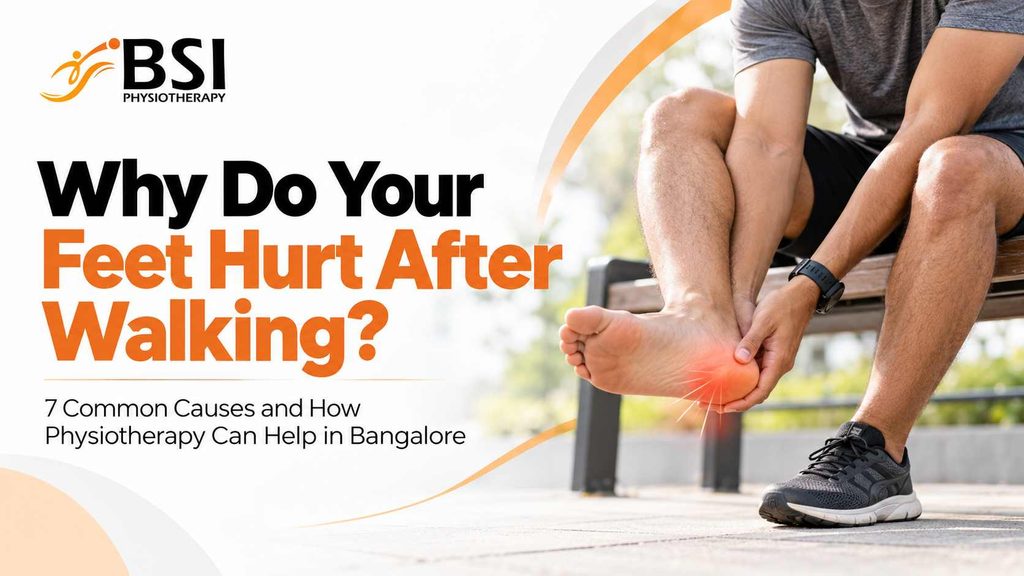
Have you ever started your morning walk feeling perfectly fine, only to experience heel pain, aching soles or discomfort around your toes after a few minutes? Perhaps your feet feel sore after a long day at work, walking through the city or completing your daily step target.
Foot pain after walking is common, but it should not always be dismissed as tiredness. The location of the pain, when it starts and how long it lasts can provide useful clues about its possible cause.
For people living in Bangalore, including office professionals, regular walkers, runners and older adults, understanding these symptoms can help prevent persistent discomfort from interfering with everyday activities.
Let’s explore seven common causes of foot pain after walking, what you can do about them and how physiotherapy may help you move more comfortably.
1. Plantar Fasciitis: Pain Under the Heel
Plantar fasciitis is a common cause of pain beneath the heel or along the bottom of the foot. The plantar fascia is a strong band of connective tissue that supports the arch of your foot.
Repeated loading of this tissue can contribute to pain, particularly when walking or standing for long periods.
Common signs include:
- Sharp heel pain during the first few steps in the morning.
- Discomfort after sitting for a long time.
- Pain that returns or increases after prolonged walking.
If you regularly walk around Lalbagh, Cubbon Park or your neighbourhood, persistent heel pain may make it difficult to maintain your routine.
Treatment depends on the assessment findings. Physiotherapy may include plantar fascia and calf stretching, progressive foot strengthening, activity modification and appropriate footwear advice.
2. Achilles Tendinopathy: Pain at the Back of the Heel
The Achilles tendon connects your calf muscles to your heel bone. It helps you push off the ground while walking, running and climbing stairs.
When the tendon is repeatedly loaded beyond its current capacity, it may become painful. This is known as Achilles tendinopathy.
You may notice stiffness after waking up, tenderness at the back of your heel or pain that increases when walking uphill or climbing stairs.
Suddenly increasing your walking distance, starting a running programme or returning to exercise after a long break may contribute to the problem.
Physiotherapy can help by gradually strengthening the calf and Achilles tendon, improving ankle movement where needed and adjusting activity levels. Recovery usually requires progressive loading rather than avoiding all movement indefinitely.
3. Metatarsalgia: Pain in the Ball of Your Foot
Does the front part of your foot hurt after walking, particularly beneath the toes? The discomfort may feel like you’re stepping on a small stone.
Metatarsalgia describes pain around the ball of the foot, where the metatarsal bones meet the toes.
Possible contributing factors include prolonged standing, increased walking, unsuitable footwear and activities that place repeated pressure on the forefoot.
High-impact exercise may also aggravate symptoms.
A physiotherapist can assess foot mechanics, footwear, strength and movement patterns to identify factors that may be contributing to the discomfort. Treatment may involve modifying activities, improving foot strength and discussing suitable footwear or padding where appropriate.
Persistent pain in this area should not automatically be assumed to be metatarsalgia, as stress injuries and nerve-related conditions can produce similar symptoms.
4. Flat Feet or High Arches
The shape of your foot influences how pressure is distributed during walking. Some people have low arches or flat feet, while others have relatively high arches.
Neither foot shape automatically means you will experience pain. However, in some individuals, foot structure combined with muscle weakness, reduced mobility or increased activity may contribute to discomfort.
You might notice aching around the arch, fatigue after standing for long periods or discomfort that develops as your walking distance increases.
A physiotherapy assessment can examine your foot posture, ankle movement, balance, muscle strength and walking pattern.
Depending on your needs, treatment may include strengthening exercises, movement training and footwear guidance. Insoles or orthoses may be considered when appropriate, but they are not necessary for everyone and should not be treated as a universal solution.
5. Unsuitable or Worn-Out Footwear
Sometimes, the problem may be related to the shoes you wear every day.
Shoes that are too tight, too loose, poorly fitted or unsuitable for your activity can contribute to discomfort. Worn cushioning or inadequate space around the toes may also make walking less comfortable.
For example, someone who spends most of the day sitting at an office in Bangalore may begin taking longer evening walks without changing to suitable walking shoes.
Pay attention to whether your footwear causes pressure around the toes, heel rubbing or discomfort beneath the arch.
Choose shoes that fit comfortably, provide adequate room for your toes and feel appropriate for your walking activity. If pain persists despite changing footwear, consider an assessment rather than repeatedly buying different shoes without understanding the cause.
6. Tight Calf Muscles and Reduced Ankle Mobility
Your calf muscles and ankle joint help your foot move smoothly through each step. If ankle movement is restricted or the calf muscles are tight, your walking mechanics may change.
Some people experience heel discomfort, calf tightness or difficulty moving the ankle forward while keeping the heel on the ground.
These findings do not always indicate the cause of foot pain, but they can be important parts of a clinical assessment.
Physiotherapy may include appropriate calf stretching, ankle mobility exercises, strengthening and movement retraining. The programme should be tailored to your symptoms and physical examination.
Avoid forcing a stretch through sharp pain. If your discomfort is severe, follows an injury or is accompanied by swelling, get medical advice before starting exercises.
7. Increasing Your Walking Distance Too Quickly
Walking is an excellent way to stay active, but suddenly increasing your daily steps can place more stress on your feet and ankles than they are prepared to handle.
This can happen when you start a fitness challenge, return to exercise after a break or increase your walking distance significantly over a short period.
Your muscles, tendons and bones need time to adapt to increased activity.
If your feet begin hurting after you increase your walking routine, temporarily reduce the activity that aggravates the pain and allow your symptoms to settle. Resume longer walks gradually, guided by your comfort and recovery.
Persistent, localised pain that worsens with weight-bearing should be assessed, as a bone stress injury can sometimes resemble an ordinary overuse problem.
How Can Physiotherapy Help with Foot Pain?
Physiotherapy aims to identify the factors contributing to your pain and develop a treatment plan that supports recovery and everyday function.
At a physiotherapy assessment, the clinician may ask about your symptoms, footwear, work routine, exercise habits and previous injuries. They may also assess ankle mobility, calf and foot strength, balance and walking mechanics.
Depending on the findings, treatment may include:
1. Individualised exercises: Stretching and progressive strengthening can help address relevant mobility and muscle deficits.
2. Manual therapy: Selected techniques may help improve movement and reduce discomfort when appropriate.
3. Activity modification: Adjusting walking distance, intensity and recovery time can help manage excessive loading.
4. Footwear guidance: A clinician can help you identify footwear features relevant to your symptoms and activity.
5. Progressive rehabilitation: Your programme can gradually build strength, walking tolerance and confidence as your symptoms improve.
For plantar heel pain, clinical practice guidelines support interventions such as plantar fascia-specific stretching, calf stretching, foot and ankle strengthening, and selected manual therapy techniques. Treatment should be based on the individual’s assessment rather than a standard routine for everyone.
When Should You Seek Medical Advice?
Seek prompt medical assessment if you experience severe or sudden foot pain, cannot bear weight, develop significant swelling or redness, notice a hot foot, or have pain following a substantial injury.
Consult a healthcare professional if your symptoms keep returning, worsen, interfere with daily activities or fail to improve after around two weeks of self-care.
People with diabetes should seek medical advice early for new foot pain, particularly if there is a wound, skin change or reduced sensation.
Frequently Asked Questions
Why do my feet hurt after walking for 20–30 minutes?
Possible causes include plantar fasciitis, tendon problems, footwear issues, reduced mobility or an increase in activity beyond your current tolerance. The location and pattern of pain help guide further assessment.
Is walking good for plantar fasciitis?
Walking may remain possible, but long distances or prolonged standing can aggravate symptoms. Adjust your activity to your tolerance and seek professional guidance if the pain persists.
Can physiotherapy cure foot pain?
Physiotherapy can help manage many musculoskeletal causes of foot pain and improve strength, mobility and walking function. Results depend on the underlying condition, its severity and the individual’s response to treatment.
Which exercises are best for foot pain?
There is no single exercise programme for every type of foot pain. Calf stretching, plantar fascia stretching and foot strengthening may help certain conditions, but the appropriate exercises depend on the diagnosis and symptoms.
Where can I get physiotherapy for foot pain in Bangalore?
You can consult a qualified physiotherapist in Bangalore for an assessment of persistent foot or heel pain. Choose a clinician who evaluates your symptoms and develops a plan based on your individual needs.
Take the First Step Towards Comfortable Walking
Foot pain after walking can have several causes, and identifying the right one is an important part of recovery. Whether your discomfort involves the heel, arch, toes or ankle, persistent symptoms deserve attention rather than being ignored.
If foot pain is affecting your daily routine, consider an assessment at BSI Physiotherapy in Bangalore. A personalised rehabilitation programme may help address relevant movement limitations, improve strength and support a gradual return to comfortable walking.
Book an assessment with BSI Physiotherapy to discuss your symptoms and explore appropriate treatment options.
Medical disclaimer: This article is intended for general educational purposes and does not replace an individual medical assessment or diagnosis.