
Targeted Physiotherapy for Migraine Relief: A Drug-Free Approach
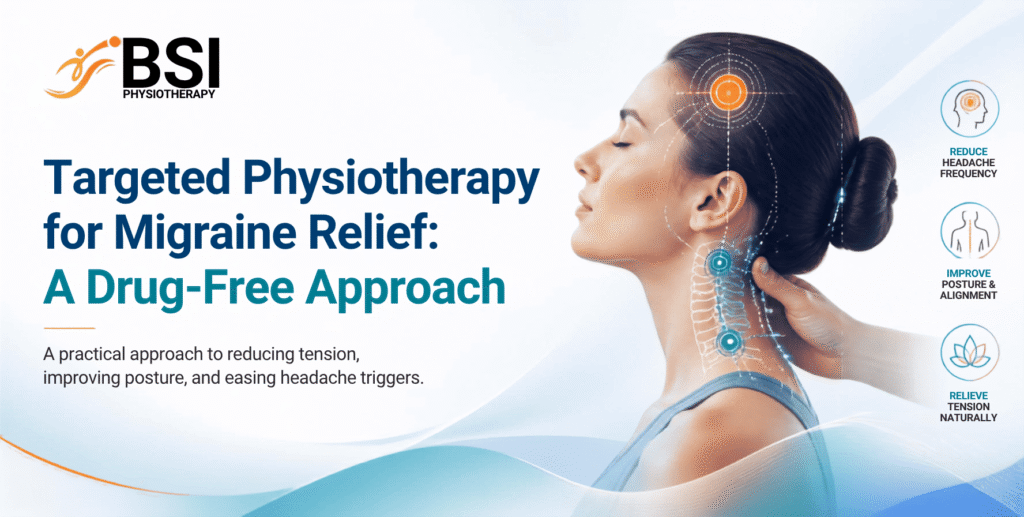
Migraines are more than “just a headache.” They are a complex neurological condition that can disrupt work, family life, sleep, and overall well-being. If you’ve ever had to cancel plans, miss work, or stay in a dark room because of a migraine attack, you know how debilitating it can be.
While medications remain an important part of migraine management, many people are now looking for complementary, drug-free options that address the underlying triggers rather than simply masking symptoms. One evidence-based approach gaining attention is targeted physiotherapy.
At BSI Physiotherapy, we believe in treating the person—not just the symptoms. Through comprehensive assessment and personalized rehabilitation, physiotherapy can help reduce migraine frequency, improve neck function, decrease muscle tension, and enhance quality of life.
This article explains how targeted physiotherapy works, who can benefit, and what you can expect during treatment.
Understanding Migraines
A migraine is a neurological disorder characterized by recurring episodes of moderate to severe headache, often accompanied by symptoms such as:
- Throbbing or pulsating pain
- Pain on one side of the head (though both sides may be affected)
- Nausea or vomiting
- Sensitivity to light, sound, or smell
- Blurred vision
- Dizziness
- Visual disturbances (aura) before the headache begins
Migraine attacks may last anywhere from 4 to 72 hours, significantly affecting productivity and daily activities.
According to global health studies, migraine is one of the leading causes of disability among adults, especially women during their working years.
Can Physiotherapy Help Migraines?
The answer is yes—for many patients, particularly those whose migraines are associated with neck dysfunction, poor posture, muscle tightness, or cervicogenic triggers.
Research suggests that physiotherapy may help by:
- Reducing neck muscle tension
- Improving cervical spine mobility
- Correcting posture
- Improving joint function
- Reducing trigger point sensitivity
- Teaching long-term self-management strategies
Rather than replacing medication, physiotherapy often works alongside medical treatment to provide more comprehensive migraine management.
The Connection Between the Neck and Migraines
Many migraine sufferers also experience:
- Neck pain
- Shoulder tightness
- Stiffness before a migraine begins
- Limited neck movement
- Upper back discomfort
This isn’t a coincidence.
The upper cervical spine shares nerve pathways with the trigeminal nerve—the primary nerve involved in migraine pain. Dysfunction in the neck muscles and joints can contribute to increased pain sensitivity and may trigger or worsen migraine attacks in susceptible individuals.
This is why a thorough neck assessment forms an essential part of migraine physiotherapy.
How Targeted Physiotherapy Helps
Unlike generic exercise programs, targeted physiotherapy begins with identifying the specific factors contributing to your migraines.
1. Comprehensive Assessment
Your physiotherapist evaluates:
- Migraine history
- Neck mobility
- Muscle strength
- Joint function
- Posture
- Ergonomics
- Stress-related muscle tension
- Daily activity patterns
Understanding your individual triggers allows treatment to be personalized.
2. Manual Therapy
Hands-on techniques may include:
- Gentle cervical joint mobilization
- Soft tissue release
- Myofascial release
- Trigger point therapy
These techniques aim to reduce muscle tightness and improve movement without aggressive manipulation.
3. Cervical Strengthening Exercises
Weak deep neck muscles often contribute to poor head posture.
Specific exercises strengthen:
- Deep neck flexors
- Upper back muscles
- Shoulder stabilizers
Improved muscular support reduces unnecessary strain on the cervical spine.
4. Postural Correction
Hours spent looking at computers, mobile phones, or laptops often create:
- Forward head posture
- Rounded shoulders
- Increased neck muscle tension
Postural retraining helps decrease the mechanical stress that may contribute to headaches.
5. Mobility Exercises
Gentle stretching and mobility exercises improve:
- Neck flexibility
- Shoulder movement
- Thoracic spine mobility
Better movement often means less stiffness and fewer pain triggers.
6. Ergonomic Advice
Many patients unknowingly trigger migraines through poor workstation setup.
Your physiotherapist may recommend:
- Proper monitor height
- Chair adjustments
- Keyboard positioning
- Regular movement breaks
- Correct sitting posture
Small ergonomic changes can have significant long-term benefits.
7. Relaxation and Breathing Techniques
Stress is one of the most common migraine triggers.
Physiotherapists often teach:
- Diaphragmatic breathing
- Relaxation exercises
- Gentle stretching routines
- Muscle relaxation techniques
These strategies help reduce excessive muscle tension associated with migraine episodes.
Who Benefits Most from Migraine Physiotherapy?
Physiotherapy may be particularly beneficial if you experience:
- Frequent migraines
- Neck stiffness before migraines
- Pain beginning in the neck and moving upward
- Desk-related headaches
- Poor posture
- Muscle tightness in the shoulders
- Chronic tension around the neck
Patients with cervicogenic headaches often respond especially well because these headaches originate from dysfunction in the cervical spine.
A proper clinical assessment helps determine whether physiotherapy is suitable for your condition.
What Happens During Your First Visit?
At BSI Physiotherapy, your first consultation focuses on understanding your condition rather than rushing into treatment.
Your physiotherapist may assess:
- Headache pattern
- Frequency
- Duration
- Trigger factors
- Neck range of motion
- Muscle tightness
- Joint mobility
- Balance
- Functional movement
- Lifestyle factors
Based on these findings, a customized treatment plan is created.
How Long Does It Take to See Results?
Recovery varies from person to person.
Some individuals notice improvements within 3–4 treatment sessions, while others with chronic migraines may require several weeks of structured rehabilitation.
Consistency with home exercises plays a significant role in achieving long-term success.
The goal is not only reducing pain but also decreasing:
- Migraine frequency
- Duration
- Medication dependence
- Disability caused by migraines
Lifestyle Habits That Support Migraine Recovery
Physiotherapy works best when combined with healthy lifestyle habits.
Stay Hydrated
Even mild dehydration may trigger headaches.
Maintain Regular Sleep
Aim for consistent sleep and wake times every day.
Manage Stress
Consider:
- Meditation
- Deep breathing
- Gentle yoga
- Walking
Exercise Regularly
Moderate physical activity supports overall neurological health.
Identify Personal Triggers
Keep a migraine diary noting:
- Foods
- Sleep
- Stress
- Hormonal changes
- Weather
- Physical activity
Understanding patterns helps improve long-term management.
Is Physiotherapy Safe for Migraine Patients?
Yes.
When performed by qualified physiotherapists following evidence-based guidelines, migraine physiotherapy is generally considered safe.
Treatment plans are individualized based on:
- Medical history
- Clinical findings
- Migraine characteristics
- Physical examination
Aggressive treatment techniques are not appropriate for every patient. A professional assessment ensures the safest and most effective approach.
When Should You Seek Medical Evaluation?
Although physiotherapy helps many migraine sufferers, urgent medical attention is necessary if you experience:
- Sudden severe headache (“worst headache of your life”)
- Weakness or numbness
- Difficulty speaking
- Loss of consciousness
- Vision loss
- Fever with neck stiffness
- Headache following significant trauma
These symptoms require immediate medical assessment.
Why Choose BSI Physiotherapy?
At BSI Physiotherapy, our team uses an evidence-based, patient-centered approach to headache and migraine management.
Our focus includes:
- Comprehensive physical assessment
- Personalized rehabilitation programs
- Postural correction
- Cervical spine rehabilitation
- Exercise therapy
- Long-term prevention strategies
- Patient education and self-management
Rather than offering a one-size-fits-all solution, we identify the factors contributing to your symptoms and create a tailored rehabilitation plan that supports lasting improvement.
Final Thoughts
Migraines can significantly impact your physical health, emotional well-being, and daily productivity. While medication remains an important part of treatment for many individuals, it doesn’t always address the physical contributors such as neck dysfunction, poor posture, and muscular tension.
Targeted physiotherapy offers a safe, evidence-informed, and drug-free approach that focuses on improving movement, reducing trigger factors, and empowering patients with practical self-management strategies. With a personalized rehabilitation program, many people experience fewer migraine attacks, reduced pain intensity, and a better quality of life.
If your migraines are associated with neck stiffness, prolonged desk work, poor posture, or recurring muscle tension, a comprehensive physiotherapy assessment may be an important step toward long-term relief.
Frequently Asked Questions (FAQs)
1. Can physiotherapy cure migraines permanently?
Physiotherapy cannot guarantee a permanent cure because migraines are a neurological condition. However, it can significantly reduce the frequency, intensity, and duration of attacks, especially when neck dysfunction and posture contribute to symptoms.
2. Is physiotherapy effective for chronic migraines?
Yes. Many people with chronic migraines benefit from individualized physiotherapy programs that include manual therapy, exercise, posture correction, and education. Results vary depending on the underlying causes and adherence to treatment.
3. How many physiotherapy sessions are needed for migraine relief?
The number of sessions depends on the severity, duration, and contributing factors. Some people notice improvement within a few sessions, while chronic cases may require several weeks of consistent treatment and home exercises.
4. Can neck pain trigger migraines?
Yes. Neck stiffness, muscle tightness, and cervical spine dysfunction can contribute to migraine attacks in some individuals. Addressing these issues through physiotherapy may help reduce migraine symptoms.
5. What exercises help reduce migraines?
Exercises commonly recommended include deep neck flexor strengthening, posture correction exercises, upper back strengthening, gentle cervical mobility exercises, and stretching. These should be prescribed by a qualified physiotherapist after an assessment.
6. Is manual therapy safe for migraine patients?
When performed by trained physiotherapists after a thorough clinical evaluation, gentle manual therapy techniques are generally safe and can help improve neck mobility and reduce muscle tension.
7. Can physiotherapy reduce migraine medication use?
Some patients may find they rely less on medication as migraine frequency and severity improve. However, any changes to prescribed medications should only be made in consultation with your physician.
8. Who is a good candidate for migraine physiotherapy?
People with migraines associated with neck pain, poor posture, prolonged desk work, muscle tightness, or cervicogenic headache features may benefit from targeted physiotherapy after a professional assessment.