
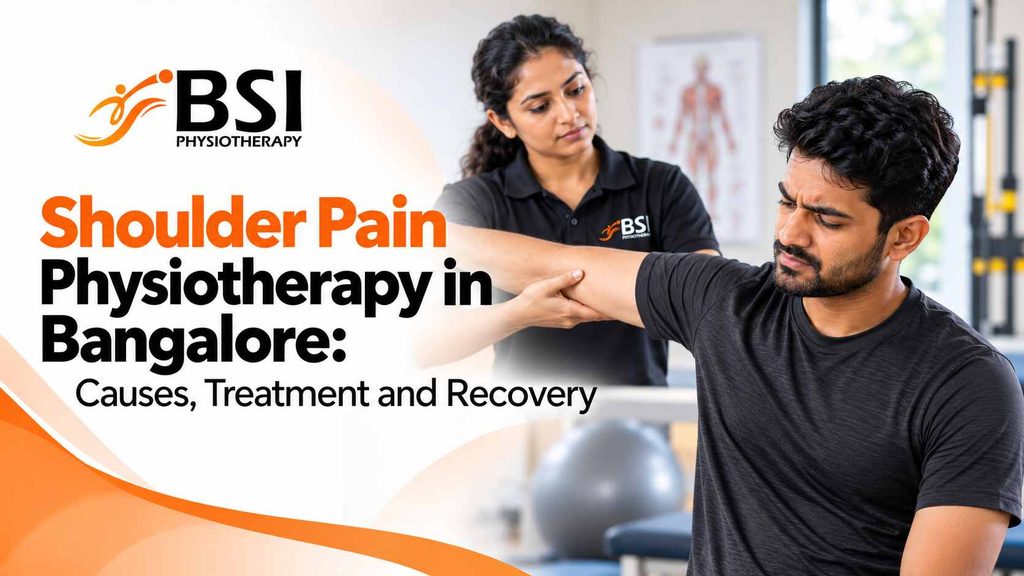
Shoulder pain can make everyday activities such as lifting your arm, getting dressed,
reaching overhead, exercising, or sleeping uncomfortable. Whether the pain develops
gradually or begins after an injury, identifying the underlying cause is an important step
towards effective treatment.
Shoulder pain physiotherapy in Bangalore can help many people improve shoulder
mobility, build strength, reduce pain, and return to their daily activities. The right rehabilitation
programme depends on the condition affecting the shoulder, the severity of symptoms, and
whether surgery is required.
At BSI Physiotherapy , shoulder rehabilitation focuses on understanding the cause of the
problem and developing an individualised treatment plan based on the patient’s condition,
functional goals, and recovery needs.
What Causes Shoulder Pain?
The shoulder is a highly mobile joint that allows the arm to move in multiple directions. This
mobility depends on the coordinated function of the rotator cuff muscles, tendons, ligaments,
shoulder blade muscles, and surrounding structures.
Because the shoulder is involved in many everyday and sporting activities, pain can develop
for several reasons.
- Rotator Cuff Injuries
The rotator cuff is a group of four muscles and their tendons that help stabilise the shoulder
and control arm movements. Repetitive overhead activities, sports injuries, age-related
tendon changes, and sudden trauma can cause rotator cuff irritation or tears. - Frozen Shoulder
Frozen shoulder, also called adhesive capsulitis, causes pain and progressive stiffness in
the shoulder joint. It can make activities such as reaching behind the back, combing hair, or
putting on clothes difficult.
Treatment depends on the stage of the condition and the degree of stiffness. Physiotherapy
may include carefully progressed mobility exercises, appropriate stretching, and techniques
to improve shoulder function without unnecessarily aggravating symptoms. - Shoulder Impingement and Tendon-Related Pain
Pain during overhead movements may be associated with rotator cuff tendon problems,
subacromial pain, or other shoulder conditions. Repetitive lifting, certain sports, and changes
in shoulder loading may contribute to symptoms.
A physiotherapist can assess movement patterns, shoulder strength, and activity-related
pain to guide an appropriate rehabilitation programme. - Shoulder Dislocation and Instability
A shoulder dislocation occurs when the upper arm bone moves out of its normal position in
the shoulder socket. After a dislocation, some people experience repeated episodes, a
feeling that the shoulder may slip out, or reduced confidence during physical activity.
Rehabilitation may focus on restoring movement, strengthening the rotator cuff and shoulder
blade muscles, and improving neuromuscular control. Recurrent instability or a suspected
structural injury requires assessment by an orthopaedic specialist. - Shoulder Pain After Surgery
Procedures such as rotator cuff repair, shoulder stabilisation surgery, and the Latarjet
procedure may require structured postoperative rehabilitation.
The recovery process varies depending on the procedure, the tissues involved, and the
surgeon’s instructions. Physiotherapy helps patients progress through the appropriate
rehabilitation stages while respecting healing restrictions. - Poor Movement Patterns and Repetitive Strain
Long working hours, repetitive overhead tasks, gym training, and sudden increases in
exercise intensity may contribute to shoulder discomfort.
Posture alone does not explain every case of shoulder pain. A comprehensive assessment
should also consider workload, muscle capacity, mobility, sleep, previous injuries, and other
relevant factors.
When Should You See a Shoulder Physiotherapist?
Consider consulting a qualified shoulder physiotherapist if you experience:
● Persistent shoulder pain that interferes with daily activities.
● Difficulty raising or rotating your arm.
● Shoulder stiffness that limits movement.
● Pain or weakness during exercise or sports.
● Difficulty returning to normal activities after shoulder surgery.
● Recurrent shoulder instability or dislocation-related symptoms.
Early assessment can help identify the likely cause of your symptoms and determine
whether physiotherapy, further medical investigation, or specialist referral is appropriate.
Seek urgent medical care if shoulder pain follows a major injury, the shoulder appears
deformed, you cannot move your arm after an injury, or you develop sudden severe pain
with swelling. Shoulder pain accompanied by chest pressure, breathlessness, sweating, or
pain spreading to the jaw requires emergency assessment. Sudden arm weakness or
numbness also warrants urgent evaluation.
How Does Shoulder Pain Physiotherapy Work?
Physiotherapy is not a single treatment or a standard set of exercises. It involves assessing
the shoulder, identifying relevant limitations, and progressing treatment according to the
individual’s needs.
- Shoulder Assessment
The initial assessment may include:
● Understanding the history and onset of pain.
● Evaluating shoulder movement and flexibility.
● Assessing muscle strength and control.
● Examining shoulder blade movement.
● Identifying activities that increase or reduce symptoms.
● Reviewing previous injuries, imaging reports, or surgical instructions when relevant.
If symptoms suggest a fracture, significant tendon tear, nerve problem, or another condition
requiring medical investigation, the physiotherapist may recommend an appropriate referral. - Pain Management and Activity Modification
During the early stages of rehabilitation, the aim is to manage symptoms while maintaining
appropriate movement.
Your physiotherapist may recommend temporarily modifying painful activities, adjusting
exercise intensity, and using suitable movement strategies. Complete rest is not always
necessary, but repeatedly forcing painful movements can aggravate some conditions. - Shoulder Mobility Exercises
Restricted movement can make everyday tasks challenging. Depending on the diagnosis, a
rehabilitation programme may include pendulum exercises, assisted arm elevation, gentle
range-of-motion exercises, or progressive stretching.
The type and intensity of movement should be appropriate for the condition. For example, a
person recovering from shoulder surgery may have strict movement restrictions that do not
apply to someone with uncomplicated shoulder stiffness. - Strengthening Exercises
Strengthening can improve the shoulder’s capacity to handle daily and sporting demands.
Exercises may target:
● Rotator cuff muscles.
● Shoulder blade stabilising muscles.
● Deltoid and other supporting muscles.
● Upper-limb strength and movement coordination.
Resistance, repetitions, and exercise difficulty should increase gradually as tolerated.
Exercise selection should be based on the patient’s assessment rather than a generic online
routine. - Functional Rehabilitation
Once pain and movement improve, treatment can progress towards activities that matter to
the patient.
Examples include lifting objects, reaching overhead, returning to gym workouts, throwing,
swimming, or participating in sports. Athletes may require additional testing of strength,
endurance, movement control, and sport-specific readiness before returning to competition.
Common Shoulder Physiotherapy Exercises
The following exercises are examples that may be used in some rehabilitation programmes.
They are not suitable for every shoulder condition.
Pendulum exercise: Lean forward with support from your unaffected arm and allow the
affected arm to hang comfortably. Gently move your body to create small arm movements
without forcing the shoulder.
Assisted shoulder elevation: Use your unaffected arm or a suitable support to help raise
the affected arm within a comfortable range, if permitted by your diagnosis and treatment
plan.
Shoulder blade setting: Gently draw your shoulder blades back into a comfortable position
without shrugging or forcing them together.
Resistance-band external rotation: With your elbow bent and held close to your side,
rotate your forearm outward against light resistance when strengthening exercises are
appropriate.
Stop an exercise if it causes sharp pain, worsening symptoms, or new weakness or
numbness. If you have recently undergone surgery, follow your surgeon’s rehabilitation
protocol rather than starting exercises independently.
Physiotherapy After Shoulder Surgery
Postoperative shoulder rehabilitation requires careful coordination between the surgeon,
physiotherapist, and patient.
The programme may involve several stages:
Phase 1: Protection and early recovery
The priority is protecting healing tissues, controlling symptoms, and following prescribed
movement restrictions. A sling may be required after certain procedures.
Phase 2: Restoring movement
When permitted, rehabilitation gradually introduces assisted and active movement to
improve mobility.
Phase 3: Progressive strengthening
As healing allows, exercises develop shoulder strength, endurance, and control.
Phase 4: Functional and sports-specific training
Patients progress towards work, household tasks, gym activities, or sports according to their
recovery and clinical assessment.
These phases are not fixed timelines. For example, rehabilitation after a rotator cuff repair
can differ significantly from recovery after a Latarjet procedure. Following the prescribed
protocol is essential.
How Long Does Shoulder Pain Physiotherapy Take?
Recovery depends on the underlying diagnosis, symptom duration, severity of the injury,
general health, and consistency with the rehabilitation programme.
| Shoulder condition | General recovery considerations |
| Mild muscle or tendon irritation |
Symptoms may improve over several weeks with appropriate management. |
| Frozen shoulder | Recovery may take several months or longer. |
| Rotator cuff injury | Progress depends on the extent of tendon damage and treatment approach. |
| Shoulder instability | Recovery varies with the severity of instability and any associated structural injury. |
| Postoperative rehabilitation |
Recovery may take several months and depends on the surgical procedure and healing restrictions. |
These are broad expectations, not individual recovery predictions. A physiotherapist can
help establish meaningful milestones and review progress throughout treatment.
How to Choose a Shoulder Physiotherapist in
Bangalore
When looking for shoulder physiotherapy in Bangalore, consider the following factors:
Experience with shoulder conditions: Look for a qualified physiotherapist experienced in
treating rotator cuff injuries, frozen shoulder, shoulder instability, and postoperative
rehabilitation.
Individualised treatment: Your programme should reflect your diagnosis, symptoms,
activity level, and recovery goals.
Post-surgical rehabilitation experience: If you have undergone shoulder surgery, choose
a team familiar with procedure-specific rehabilitation protocols.
Progress tracking: Treatment should include regular reassessment of pain, movement,
strength, and functional ability.
Coordination with specialists: Complex injuries may require communication between the
physiotherapist and orthopaedic surgeon.
Convenient access and follow-up: Consistent attendance and a manageable home
exercise programme can support rehabilitation progress.
Shoulder Pain Physiotherapy at Bangalore Shoulder
Institute
BSI Physiotherapy provides a specialised setting for people seeking shoulder assessment,
rehabilitation, and recovery support.
Whether you are experiencing persistent shoulder pain, restricted movement, a
sports-related injury, or require rehabilitation after shoulder surgery, an individualised
assessment can help identify the next appropriate step.
The rehabilitation approach may focus on improving mobility, restoring strength, developing
movement control, and helping patients gradually return to their usual activities. Treatment
recommendations depend on the clinical assessment and the specific condition being
treated.
If your shoulder pain is affecting your work, sleep, exercise, or daily routine, consider
arranging an assessment with a qualified physiotherapist.
Book a shoulder physiotherapy consultation with Bangalore Shoulder Institute to
discuss your symptoms and explore an appropriate rehabilitation plan.
Frequently Asked Questions
- Can physiotherapy help with shoulder pain?
Yes. Physiotherapy can help many shoulder conditions by improving movement, strength,
function, and tolerance for daily activities. The benefits depend on the underlying diagnosis,
and some injuries may require additional medical or surgical treatment. - Which physiotherapy is best for shoulder pain?
The most appropriate treatment depends on the cause of the pain. Mobility exercises may
help certain stiffness-related conditions, while progressive strengthening may be useful for
some tendon-related problems. Postoperative patients need a programme tailored to their
procedure and healing stage. - Can a physiotherapist treat frozen shoulder?
Physiotherapy may help improve movement and function in frozen shoulder. Treatment
should be adjusted to the stage of the condition and the patient’s pain tolerance. Aggressive
stretching is not appropriate for everyone. - Do I need an MRI before starting shoulder physiotherapy?
Not necessarily. Many shoulder conditions can initially be assessed through a clinical
examination. Imaging may be recommended when the history, examination findings,
suspected injury, or response to treatment indicates that further investigation is needed. - Can I do shoulder exercises if I have a rotator cuff tear?
Some people with rotator cuff tears benefit from carefully selected exercises. However, the
appropriate programme depends on the size and type of tear, symptoms, strength, activity
demands, and whether surgery is being considered. Significant weakness or an injury
following trauma warrants medical assessment. - Is physiotherapy necessary after shoulder surgery?
For many shoulder procedures, rehabilitation is an important part of recovery. The timing and
type of physiotherapy depend on the operation and the surgeon’s instructions. - When should I consult a shoulder physiotherapist in Bangalore?
Consider an assessment if shoulder pain, stiffness, weakness, or restricted movement
persists or interferes with daily activities. Following surgery or a significant injury, consult
your treating clinician about when rehabilitation should begin.
Conclusion
Shoulder pain can result from several conditions, including rotator cuff injuries, frozen
shoulder, tendon-related problems, instability, and postoperative recovery. Identifying the
cause helps determine the most appropriate treatment and rehabilitation approach.
With a suitable assessment, individualised physiotherapy, and a progressive recovery plan,
many people can improve shoulder movement and function and return to their usual
activities.
If you are searching for a shoulder physiotherapist in Bangalore, Bangalore Shoulder
Institute can be a starting point for discussing your symptoms and rehabilitation needs with a
qualified professional.
Medical disclaimer: This article is for educational purposes only and does not replace a
individual clinical assessment, diagnosis, or medical advice.