
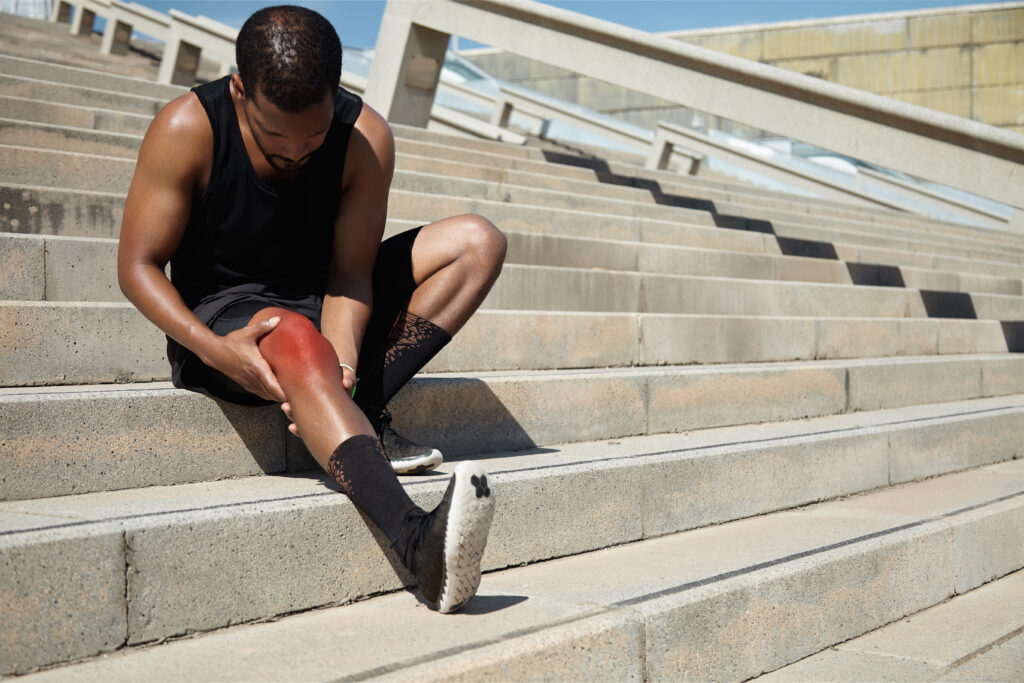
What is MTSS?
Medial Tibial Stress Syndrome, commonly known as Shin Splints, is pain along the inner
edge of the shin bone (tibia). It’s a common overuse injury seen in runners, athletes, and
active individuals.
Who Gets It?
✔Runners (especially beginners)
✔Military recruits
✔ Dancers
✔ Athletes with sudden training increases
✔ People with poor foot biomechanics
Where is the Pain?
Pain usually occurs:
● Along the inner border of the tibia
● During or after activity
● Often felt over a larger area (not a pinpoint spot)
Common Causes
�Excessive repetitive stress on the shin
�Sudden increase in training intensity or duration
�Hard running surfaces�
�Inappropriate footwear
�Flat feet or overpronation
�Weak hip/core muscles
How Does It Happen?
Your muscles and connective tissues along the shin get overloaded →
This causes inflammation and stress on the bone’s surface, resulting in pain.
Typical Symptoms
✔ Pain early in activity that may subside & return
✔ Tenderness along inner tibia
✔ Dull ache after exercise
✔ Mild swelling (occasionally)
How Physiotherapists Diagnose It
➡Clinical assessment
➡Movement & gait analysis
➡Strength & flexibility testing
➡Foot biomechanics evaluation
Imaging is not always needed unless symptoms persist.
Treatment Approach at BSI Physiotherapy
1.Rest & Load Management
Reduce training—modify runs, low-impact cross-training (e.g., cycling/swimming).
2.Pain & Inflammation Control
Ice therapy, manual therapy, modalities (as appropriate).
3.Strengthening Focus
● Calf muscles (gastrocnemius & soleus)
● Tibialis posterior & intrinsic foot muscles
● Hip abductors & core
4.Flexibility & Mobility
Calf stretches, Achilles tendon care, foot muscles.
5.Footwear & Orthotics
● Supportive shoes
● Custom/semi-custom orthotics (if needed)
6.Return to Running Plan
Gradual, guided progression tailored to the patient.
Prevention Tips:
✅Warm-up properly
✅Gradual training increases (10% rule)
✅Strength & mobility exercises
✅Avoid hard surfaces
✅Choose appropriate footwear
BSI Physiotherapy Tip
Shin pain that worsens with activity shouldn’t be ignored—early physiotherapy can get you
back on track faster and prevent chronic problems.
“If you’re dealing with shin pain during running or workouts — drop a comment, like, and
follow BSI Physiotherapy for more injury insights and recovery tips!
DM us to book a physiotherapy assessment today!”