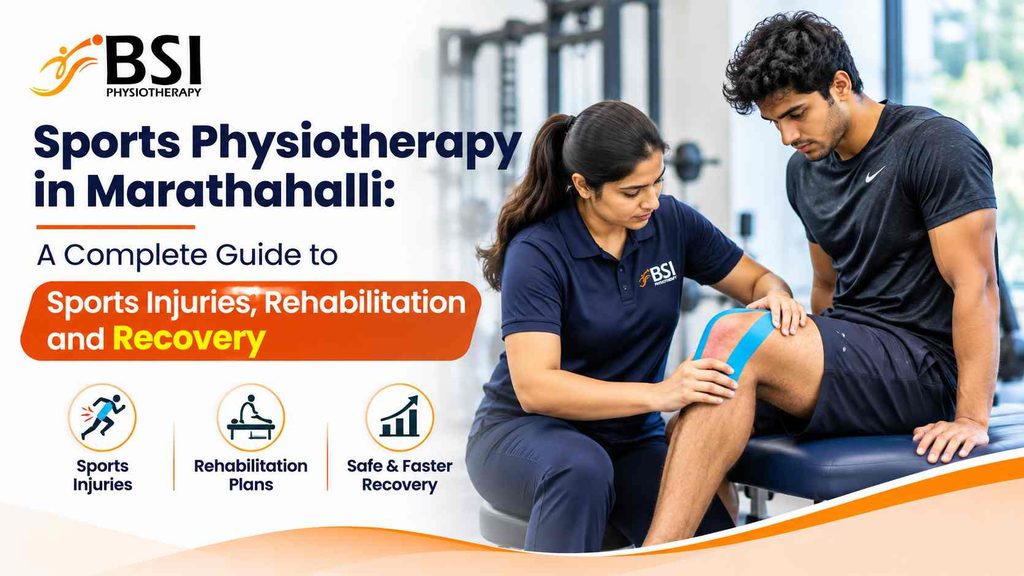
Whether you are a professional athlete, a weekend football player, a regular gym enthusiast or someone who enjoys running, sports and physical activities place demands on your muscles, joints and ligaments.
Although exercise supports overall health and fitness, improper training loads, sudden movements, inadequate recovery and accidental injuries can sometimes affect physical performance.
Sports physiotherapy plays an important role in assessing sports-related injuries, supporting rehabilitation, improving movement and helping individuals return to physical activities safely.
For athletes and fitness enthusiasts in Bangalore, finding the right sports physiotherapy clinic in Marathahalli can be an important step towards effective injury management and long-term physical performance.
In this guide, we explore common sports injuries, the role of sports physiotherapy, rehabilitation approaches and what to consider when choosing a sports physiotherapist.
What Is Sports Physiotherapy?
Sports physiotherapy is a specialised area of physiotherapy focused on the assessment, prevention and rehabilitation of injuries associated with sports and physical activities.
Unlike general exercise programmes, sports rehabilitation considers the physical demands of an individual’s specific sport, injury history, fitness level and performance goals.
A sports physiotherapist may help individuals with:
- Muscle strains and ligament injuries.
- Joint pain and movement restrictions.
- Sports-related shoulder and knee injuries.
- Running-related injuries.
- Postoperative sports rehabilitation.
- Strength and conditioning.
- Balance and movement control.
- Return-to-sport preparation.
The objective is not simply to reduce pain but also to restore physical function and prepare the individual for the demands of their chosen activity.
8 Common Sports Injuries That Require Physiotherapy
1. ACL Injuries
The anterior cruciate ligament (ACL) is one of the major stabilising ligaments of the knee. ACL injuries frequently occur during activities involving sudden direction changes, pivoting, jumping and landing.
Common symptoms include knee swelling, pain, instability and difficulty continuing physical activity.
ACL rehabilitation may involve:
- Managing swelling and restoring knee movement.
- Regaining quadriceps and hamstring strength.
- Improving balance and neuromuscular control.
- Progressive running and jumping exercises.
- Sport-specific movement training.
After ACL reconstruction, rehabilitation should follow a structured, criteria-based programme developed in coordination with the treating surgeon and physiotherapist.
2. Hamstring Injuries
Hamstring injuries are common in sports involving sprinting, acceleration and rapid changes in speed.
Athletes may experience sudden pain in the back of the thigh, muscle tenderness and difficulty running.
Physiotherapy may include progressive strengthening, flexibility work, running progression and sport-specific exercises.
Gradually increasing the load placed on the injured muscle is important before returning to high-speed running.
3. Ankle Sprains
An ankle sprain occurs when the ligaments supporting the ankle are stretched or injured, commonly during sudden twisting movements or landing on an uneven surface.
Symptoms may include pain, swelling, bruising and difficulty walking.
Rehabilitation may involve:
- Restoring ankle mobility.
- Strengthening the surrounding muscles.
- Balance and proprioception training.
- Functional movement exercises.
- Gradual return to running and sports.
Proper rehabilitation is important because some individuals experience repeated ankle sprains and persistent instability.
4. Shoulder Injuries
Sports such as swimming, badminton, tennis, cricket and weightlifting involve repetitive shoulder movements.
These activities may contribute to shoulder pain, rotator cuff-related problems, instability or other shoulder injuries.
Physiotherapy may focus on:
- Rotator cuff strengthening.
- Scapular stabilisation.
- Shoulder mobility.
- Movement control.
- Progressive sport-specific strengthening.
For athletes recovering from shoulder surgery, the rehabilitation programme must consider the procedure performed and the surgeon’s recommendations.
5. Tennis Elbow
Tennis elbow, medically known as lateral elbow tendinopathy, involves pain around the outer part of the elbow.
Despite its name, the condition can affect people who play tennis as well as individuals involved in repetitive gripping, lifting and wrist movements.
Management may include progressive strengthening exercises, load modification and functional rehabilitation.
6. Patellar Tendinopathy
Patellar tendinopathy affects the tendon connecting the kneecap to the shinbone. It is commonly associated with activities involving repetitive jumping, sprinting and landing.
Athletes may experience pain around the front of the knee, particularly during jumping, squatting and running.
Physiotherapy commonly involves progressive tendon-loading exercises, strength development and appropriate management of training intensity.
7. Muscle Strains
Muscle strains occur when muscle fibres are overstretched or overloaded. They commonly affect the hamstrings, quadriceps and calf muscles.
Symptoms may include localised pain, tenderness, swelling and reduced muscle function.
Rehabilitation depends on the severity of the injury and may include gradual loading, strengthening, mobility exercises and sport-specific training.
8. Running-Related Injuries
Runners may experience several conditions associated with training load, biomechanics and recovery.
Common problems include:
- Plantar heel pain.
- Achilles tendinopathy.
- Patellofemoral pain.
- Shin pain.
- Calf muscle injuries.
- Iliotibial band-related pain.
A sports physiotherapist may assess running mechanics, training habits, strength, mobility and other relevant factors to guide rehabilitation.
How Does Sports Physiotherapy Help Athletes Recover?
Sports injury rehabilitation is a progressive process. The treatment approach depends on the injury, tissue healing, physical demands and individual recovery goals.
1. Initial Injury Assessment
The first step involves understanding how the injury occurred and evaluating the affected area.
The physiotherapist may assess pain, swelling, joint movement, muscle strength, stability and functional limitations.
If the findings suggest a significant injury, further medical evaluation or imaging may be recommended.
2. Pain Management and Movement Restoration
Early rehabilitation focuses on managing symptoms and restoring appropriate movement.
Depending on the condition, treatment may include therapeutic exercises, activity modification, manual therapy and other clinically appropriate interventions.
3. Strength and Conditioning
Muscle strength plays an important role in sports performance and rehabilitation.
Progressive strengthening exercises may target the injured area as well as other muscles involved in the athlete’s movement patterns.
The programme may include resistance training, balance exercises, core strengthening and functional movements.
4. Sport-Specific Rehabilitation
An athlete needs more than basic strength to return to competitive activity.
Depending on the sport, rehabilitation may include sprinting, jumping, landing, agility drills, direction changes and other sport-specific movements.
The training intensity is gradually progressed according to the individual’s tolerance and assessment findings.
5. Return-to-Sport Assessment
Returning to sports should not depend only on the number of weeks since an injury or whether the pain has disappeared.
A physiotherapist may evaluate:
- Muscle strength.
- Joint range of motion.
- Balance and coordination.
- Jumping and landing mechanics.
- Agility and direction changes.
- Sport-specific functional performance.
- Confidence and psychological readiness.
Return-to-sport decisions should consider the athlete’s injury, physical capacity, sport demands and medical clearance requirements.
Can Sports Physiotherapy Help Prevent Future Injuries?
Sports physiotherapy can also support injury-risk reduction through appropriate exercise programmes and training education.
Some useful strategies include:
Strength Training: Developing adequate muscle strength for the physical demands of a sport.
Movement Assessment: Identifying relevant movement limitations and control difficulties.
Load Management: Avoiding sudden increases in training intensity, volume or frequency.
Warm-Up and Preparation: Using appropriate dynamic warm-ups before sports participation.
Recovery Planning: Allowing sufficient recovery between demanding training sessions.
Sport-Specific Conditioning: Preparing the body for the movements and physical demands of the chosen sport.
Although these strategies may help reduce certain injury risks, no programme can guarantee complete injury prevention.
Who Can Benefit from Sports Physiotherapy?
Sports physiotherapy is not limited to professional athletes.
It may benefit:
- Professional and competitive athletes.
- Football, cricket and badminton players.
- Runners and marathon participants.
- Gym and strength-training enthusiasts.
- School and college athletes.
- Recreational sports players.
- Individuals recovering from sports-related surgery.
- People returning to exercise after an injury.
Anyone experiencing pain, reduced strength or movement limitations during physical activity may benefit from an appropriate clinical assessment.
Why Choose BSI Physiotherapy in Marathahalli, Bangalore?
BSI Physiotherapy provides sports physiotherapy, orthopaedic rehabilitation and movement-related rehabilitation services for individuals in Marathahalli and surrounding areas of East Bangalore.
The clinic focuses on helping athletes, fitness enthusiasts and individuals recovering from injuries work towards their physical and functional goals.
BSI offers several relevant rehabilitation services:
Sports Injury Rehabilitation: Assessment and rehabilitation programmes for muscle strains, ligament injuries, joint problems and other sports-related conditions.
Sports Physiotherapy: Individualised rehabilitation for athletes and physically active individuals.
Shoulder Rehabilitation: Rehabilitation for rotator cuff injuries, shoulder instability, mobility restrictions and recovery following shoulder procedures.
Strength and Conditioning: Progressive exercise programmes focusing on strength, physical capacity and functional performance.
Runners Clinic and Gait Analysis: Assessment of running mechanics and movement patterns to help identify relevant movement limitations and guide rehabilitation.
Post-Surgical Rehabilitation: Structured recovery programmes following orthopaedic procedures, including sports-related surgeries.
Orthopaedic Physiotherapy: Management of musculoskeletal conditions affecting muscles, joints and movement.
BSI’s physiotherapy team includes professionals with experience in sports and orthopaedic rehabilitation.
The approach involves understanding the individual’s injury, evaluating physical limitations and developing a rehabilitation programme based on clinical findings and recovery goals.
Located on 2nd Floor, 72, Service Rd, LRDE Layout, Doddanekundi, Marathahalli, Bengaluru, Karnataka 560037 , Chinnapanahalli, BSI Physiotherapy is accessible to individuals from Marathahalli, Brookefield, Doddanekkundi, Kundalahalli and nearby areas.
Whether you are recovering from a ligament injury, experiencing shoulder pain or looking to return to running after an injury, the BSI team can help assess your rehabilitation requirements.
Frequently Asked Questions About Sports Physiotherapy
1. What is the difference between sports physiotherapy and regular physiotherapy?
Sports physiotherapy focuses on injuries associated with sports and physical activity. It also considers athletic performance, sport-specific movements and return-to-sport preparation.
2. When should an athlete visit a sports physiotherapist?
An athlete should consider an assessment when experiencing persistent pain, swelling, reduced movement, muscle weakness, recurrent injuries or difficulty performing sports activities.
3. Can sports physiotherapy help after ACL surgery?
Yes. Sports physiotherapy is an important component of ACL rehabilitation. It focuses on restoring knee movement, strength, balance and functional performance before progressing towards running and sports participation.
4. How long does sports injury rehabilitation take?
Recovery time varies according to the injury, severity, treatment approach and individual healing response. Your physiotherapist and treating doctor can guide the expected recovery milestones.
5. Can runners benefit from gait analysis?
Gait analysis can help evaluate running mechanics, movement patterns and relevant functional limitations. The findings may help guide individualised rehabilitation or training modifications.
6. Where can I find sports physiotherapy in Marathahalli?
BSI Physiotherapy offers sports physiotherapy and rehabilitation services at its Marathahalli clinic on Alpine Eco Road, opposite Alpine Eco Apartments, Chinnapanahalli, Bengaluru.
Get Sports Physiotherapy Support at BSI Marathahalli
Sports injuries can affect your training, performance and ability to participate in activities you enjoy.
Appropriate assessment and structured rehabilitation can help address injury-related limitations and support a gradual return to physical activity.
If you are looking for sports physiotherapy in Marathahalli, Bangalore, BSI Physiotherapy provides sports injury rehabilitation, shoulder rehabilitation, strength and conditioning and gait analysis services.
BSI Physiotherapy – Marathahalli
Address: 2nd Floor, 72, Service Rd, LRDE Layout, Doddanekundi, Marathahalli, Bengaluru, Karnataka 560037
Website: https://www.bsiphysiotherapy.com/
Contact the clinic to enquire about sports physiotherapy consultations and rehabilitation services.
Medical disclaimer: This article is intended for general educational purposes and does not replace individual medical advice, diagnosis or clinical assessment.