
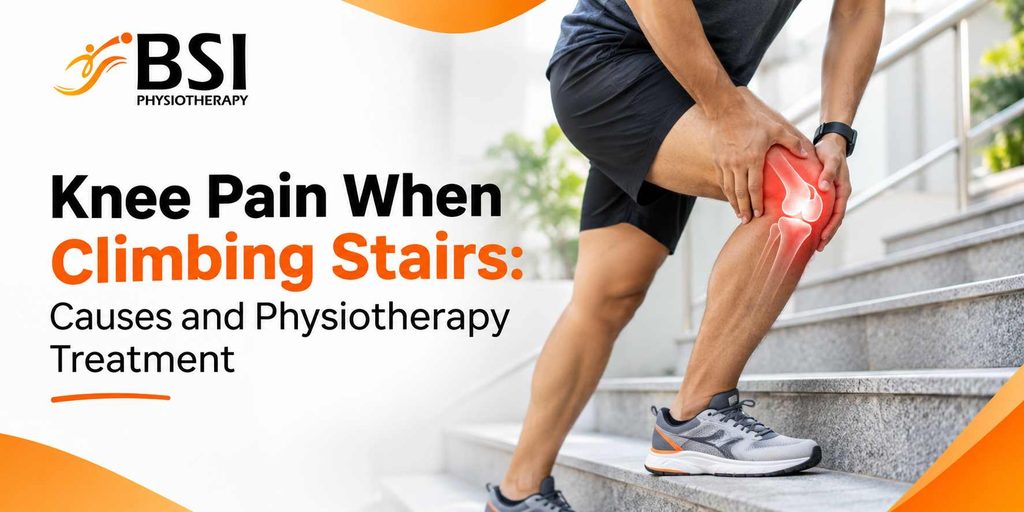
Have you ever experienced knee pain while climbing stairs or felt discomfort when walking downstairs? Even simple activities such as climbing steps at home, using office staircases or getting out of a chair can become difficult when your knees are painful.
Knee pain during stair climbing is a common complaint among adults, older individuals and physically active people. It may develop gradually due to muscle weakness, overuse, joint problems or an underlying knee condition. In some cases, it can also be associated with previous sports injuries or age-related changes in the knee joint.
Although occasional discomfort may improve with appropriate rest and activity modification, persistent knee pain should not be ignored. Identifying the underlying cause and starting the right treatment can help improve mobility and prevent further functional limitations.
At BSI Physiotherapy, rehabilitation focuses on understanding the cause of movement-related pain and helping individuals improve their strength, joint mobility and everyday physical function.
In this article, we explore why knee pain occurs when climbing stairs, the common conditions associated with it and how physiotherapy can help manage the problem.
Why Does My Knee Hurt When Climbing Stairs?
Your knee joint supports your body weight during walking, standing, bending and climbing stairs. When climbing stairs, the knee bends while the muscles surrounding the joint work to control movement and support your body.
This activity places increased demands on the quadriceps muscles and the joint between the kneecap (patella) and thigh bone (femur).
If the muscles are weak, the joint is irritated or the knee has an underlying injury, climbing stairs may produce pain or discomfort.
Some people experience pain mainly while climbing upwards, while others find walking downstairs more uncomfortable. The location and nature of the pain can provide useful information during a clinical assessment.
Common Causes of Knee Pain When Climbing Stairs
Several conditions can contribute to knee pain during stair climbing. Understanding these causes is important for choosing the appropriate treatment.
1. Patellofemoral Pain Syndrome (Runner’s Knee)
Patellofemoral pain syndrome is one of the common causes of pain around or behind the kneecap.
It occurs when activities that repeatedly load the knee in a bent position cause irritation around the patellofemoral joint.
Common symptoms include:
- Pain around or behind the kneecap.
- Discomfort while climbing or descending stairs.
- Pain during squatting or lunging.
- Discomfort after sitting with bent knees for extended periods.
- Pain during running and jumping activities.
Muscle weakness, changes in training intensity and movement-control difficulties may contribute to this condition.
2. Knee Osteoarthritis
Knee osteoarthritis is a degenerative joint condition that affects the cartilage and other structures within the knee.
It is more common with increasing age, although it can also occur earlier, particularly following previous injuries or other joint-related problems.
Common symptoms include:
- Pain while walking or climbing stairs.
- Morning stiffness.
- Reduced knee movement.
- Swelling around the joint.
- Grinding or crackling sensations.
- Difficulty standing up after sitting for a long time.
Patients with knee osteoarthritis may experience discomfort during both stair climbing and descending.
3. Quadriceps Muscle Weakness
The quadriceps are the muscles located at the front of your thigh. They play an important role in straightening the knee and controlling lower-limb movement.
When these muscles become weak, the knee may have difficulty managing the demands of activities such as climbing stairs, squatting and getting up from a chair.
Quadriceps weakness can develop due to inactivity, prolonged bed rest, previous injuries or post-operative recovery.
Strengthening these muscles is often an important part of knee rehabilitation.
4. Meniscus Injury
The meniscus is a C-shaped cartilage structure inside the knee that helps distribute loads and provide joint stability.
A meniscus tear may occur following a sudden twisting movement, sports injury or age-related degenerative changes.
Symptoms may include:
- Pain along the inner or outer knee joint.
- Swelling and stiffness.
- Difficulty bending or straightening the knee.
- Catching or locking sensations.
- Discomfort during stair climbing.
The appropriate treatment depends on the type of tear, associated symptoms and the patient’s activity requirements.
5. Patellar Tendinopathy
The patellar tendon connects the kneecap to the shinbone. Repeated loading from activities such as jumping, running and sports training can irritate this tendon.
Patients may experience pain just below the kneecap, particularly during activities involving repeated knee bending and straightening.
This condition is frequently seen in athletes and individuals involved in repetitive jumping activities.
6. Previous Knee Injuries
Previous ACL injuries, ligament sprains, fractures and other knee injuries can affect joint stability, muscle strength and movement patterns.
Even after the initial injury has healed, some individuals may experience difficulty climbing stairs if they have not regained adequate strength, balance and functional control.
A proper rehabilitation programme can help address these limitations.
Why Is Walking Downstairs Sometimes More Painful?
Many people notice that walking downstairs causes more knee pain than climbing upwards.
This is because descending stairs requires the quadriceps muscles to control the body’s downward movement while the knee bends.
This controlled muscle action is known as eccentric muscle contraction.
When the quadriceps are weak or the patellofemoral joint is sensitive, this activity may increase discomfort around the kneecap.
However, pain while descending stairs does not automatically indicate a particular knee condition. A clinical assessment is necessary to identify the underlying cause.
How Can Physiotherapy Help Treat Knee Pain?
Physiotherapy is an important component of managing many knee conditions. It focuses on improving joint movement, muscle strength, balance and functional ability.
For individuals experiencing persistent discomfort, a physiotherapist can assess the knee and develop an individualised treatment programme.
Here are some commonly used physiotherapy approaches.
1. Detailed Knee Assessment
The first step is understanding why the knee hurts.
A physiotherapy assessment may include:
- Understanding the history of knee pain.
- Identifying the location and intensity of discomfort.
- Assessing knee joint movement.
- Evaluating quadriceps and hip muscle strength.
- Checking balance and lower-limb control.
- Observing walking and stair-climbing patterns.
- Reviewing previous injuries and surgical history.
If the findings suggest a condition requiring further medical investigation, referral to an appropriate doctor may be recommended.
2. Quadriceps Strengthening Exercises
Strengthening the quadriceps helps improve the ability of the knee to support body weight during daily activities.
Depending on the patient’s condition, exercises may include:
- Quadriceps setting exercises.
- Straight leg raises.
- Seated knee extensions.
- Supported sit-to-stand exercises.
- Progressive resistance exercises.
The exercise intensity and progression should be adjusted according to the patient’s symptoms and physical capacity.
3. Hip and Gluteal Strengthening
The muscles around the hip contribute to lower-limb movement and stability.
Weakness or poor movement control around the hip may affect how the knee moves during activities such as stair climbing, running and squatting.
A physiotherapist may include exercises such as:
- Glute bridges.
- Side-lying hip abduction.
- Resistance band exercises.
- Hip extension exercises.
- Functional strengthening activities.
These exercises help improve overall lower-limb strength and movement control.
4. Knee Mobility Exercises
Joint stiffness can make activities such as bending the knee, sitting and climbing stairs uncomfortable.
Appropriate mobility exercises may help maintain or improve the available range of motion.
Treatment may include gentle knee bending and straightening exercises, stretching and active movement exercises.
5. Balance and Functional Training
Strength alone may not be sufficient for returning to everyday activities.
Patients may also require balance and coordination training to improve control during standing, walking and stair navigation.
Functional rehabilitation can include:
- Weight-shifting exercises.
- Supported single-leg balance.
- Controlled step-up exercises.
- Step-down training.
- Sit-to-stand practice.
These exercises are introduced progressively based on the patient’s ability and recovery.
6. Stair-Climbing Rehabilitation
For patients whose main difficulty is climbing stairs, rehabilitation should eventually include task-specific training.
A physiotherapist may begin with supported movements and gradually introduce step-ups, controlled step-downs and actual stair practice.
The objective is to improve confidence, strength and control while performing everyday movements.
Simple Tips to Reduce Knee Discomfort While Using Stairs
Along with appropriate treatment, a few practical adjustments may help reduce discomfort.
- Use the handrail: Hold the railing for additional support and balance.
- Avoid rushing: Climb or descend stairs at a comfortable pace.
- Wear supportive footwear: Choose comfortable footwear with suitable support.
- Avoid sudden increases in activity: Gradually increase exercise intensity and walking duration.
- Manage your body weight: If you are above your healthy weight range, appropriate weight management may help reduce loading on the knee.
- Follow a structured exercise programme: Perform exercises recommended by your physiotherapist.
If stair climbing causes significant pain, temporarily modify the activity and seek professional assessment rather than repeatedly pushing through the discomfort.
When Should You Consult a Physiotherapist for Knee Pain?
Consider seeking professional assessment if:
- Knee pain continues for several days or weeks without improvement.
- You experience repeated discomfort while climbing or descending stairs.
- Your knee feels stiff after sitting for long periods.
- You find it difficult to squat, walk or stand from a chair.
- You experience recurring knee swelling.
- Knee pain affects your ability to work, exercise or perform daily activities.
Seek urgent medical attention if you cannot bear weight, the knee becomes severely swollen or deformed, or you develop a hot, red knee with fever. A locked knee or sudden significant instability also requires prompt assessment.
Early evaluation can help identify the cause and determine whether physiotherapy, medical management or further investigation is required.
Choosing the Right Physiotherapy Centre for Knee Pain Treatment in Bangalore
Finding the right rehabilitation team is an important part of managing persistent knee pain.
When searching for the Best Physiotherapy Clinic in Bangalore, consider the following:
- Qualified and experienced physiotherapists.
- Detailed assessment before starting treatment.
- Individualised rehabilitation programmes.
- Experience in orthopaedic and sports rehabilitation.
- Appropriate exercise and rehabilitation facilities.
- Regular evaluation of treatment progress.
- Clear communication about recovery goals.
At BSI Physiotherapy, patients receive assessment-based physiotherapy focused on improving movement, strength and functional recovery.
With clinics serving Marathahalli, Jayanagar and Whitefield, BSI Physiotherapy supports individuals with different orthopaedic, sports-related and rehabilitation needs.
Whether your knee discomfort affects walking, stair climbing, exercise or everyday activities, understanding the underlying cause is the first step towards appropriate treatment.
If you are looking for Knee Pain Treatment in Bangalore, consult a qualified healthcare professional to understand the treatment options suitable for your condition.
Frequently Asked Questions About Knee Pain When Climbing Stairs
1. Why do my knees hurt when climbing stairs but not when walking?
Climbing stairs requires greater knee bending and increased muscle effort compared with walking on level ground. Conditions such as patellofemoral pain syndrome, quadriceps weakness and knee osteoarthritis may cause discomfort specifically during stair climbing.
2. Is knee pain while climbing stairs a sign of arthritis?
Not necessarily. Knee osteoarthritis can cause pain during stair climbing, but other conditions, including patellofemoral pain syndrome, muscle weakness and tendon problems, can produce similar symptoms. A clinical assessment is needed to identify the cause.
3. Is walking good for knee pain?
Walking may be beneficial for many people with knee pain, particularly when the activity is comfortable and appropriately adjusted. However, walking distance and intensity should be based on the individual’s condition and tolerance.
4. Which exercises help reduce knee pain while climbing stairs?
Depending on the diagnosis, quadriceps strengthening, hip strengthening, mobility exercises and controlled step-up training may help. Exercises should be selected and progressed by a physiotherapist based on the patient’s assessment.
5. Should I avoid climbing stairs if I have knee pain?
If stair climbing causes discomfort, temporarily reduce unnecessary stair use and avoid repeatedly aggravating the knee. However, complete inactivity is not always necessary. A physiotherapist can recommend suitable activity modifications and a gradual return to stair climbing.
6. Can physiotherapy help knee pain without surgery?
Yes. Many knee conditions can be managed conservatively through appropriate physiotherapy, exercise-based rehabilitation and activity modification. However, treatment depends on the underlying diagnosis, severity and individual clinical requirements.
7. How long does physiotherapy take to improve knee pain?
Recovery varies depending on the cause, severity, duration of symptoms and consistency with rehabilitation. Some people improve within a few weeks, while chronic conditions or post-surgical cases may require a longer rehabilitation programme.
8. Where can I get knee pain physiotherapy in Bangalore?
You can consult a qualified physiotherapist at a clinic that provides orthopaedic and musculoskeletal rehabilitation. BSI Physiotherapy has clinics serving Marathahalli, Jayanagar and Whitefield, Bangalore.
Conclusion
Knee pain when climbing stairs can affect more than just mobility. It can make routine activities, exercise and independent movement increasingly difficult.
Conditions such as patellofemoral pain syndrome, knee osteoarthritis, meniscus injuries and quadriceps weakness can contribute to stair-related knee discomfort.
Identifying the underlying cause through a proper assessment and following an appropriate rehabilitation programme can help improve strength, movement and functional ability.
If you are experiencing persistent knee discomfort, do not ignore the symptoms or rely only on temporary pain relief. The right rehabilitation approach can help you work towards better knee function and a more active lifestyle.
BSI Physiotherapy – Supporting Better Movement Through Personalised Rehabilitation.
Visit Us to Know More : https://www.bsiphysiotherapy.com/