
Methods to Manage Plantar Fasciitis in Bangalore: Evidence-Based Physiotherapy Approaches
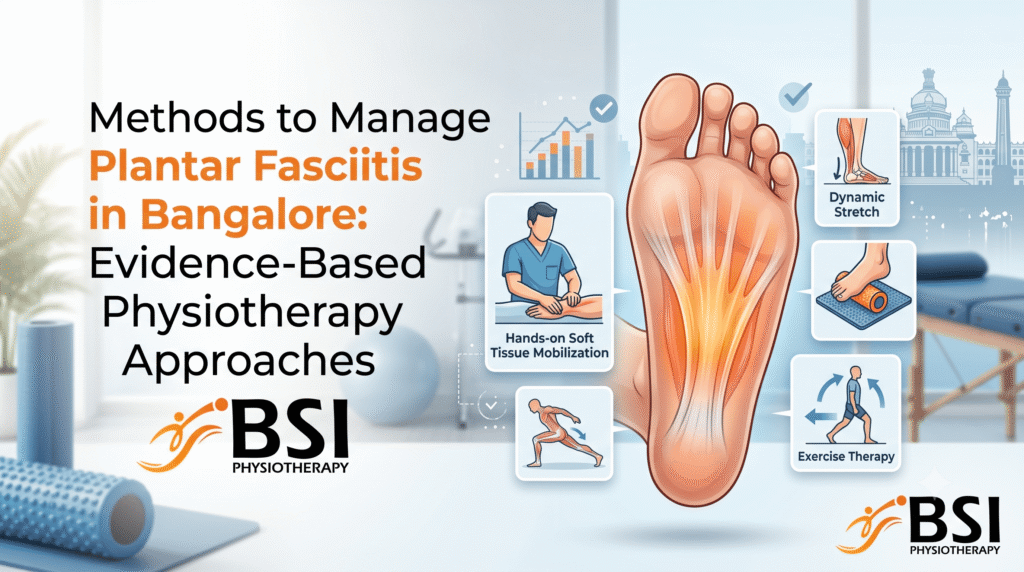
Plantar fasciitis is a common cause of heel and foot pain that can interfere with walking, exercise, work and everyday activities. It is often noticed as pain around the bottom of the heel, particularly during the first few steps after waking up or after a period of rest.
Although plantar fasciitis can improve over time, persistent symptoms may affect activity levels and quality of life. Understanding the factors contributing to the condition can help guide appropriate management.
For people looking for methods to manage plantar fasciitis in Bangalore, physiotherapy can play an important role in assessing symptoms, identifying contributing factors and developing a progressive rehabilitation programme.
At BSI Physiotherapy, management is tailored to the individual’s symptoms, activity requirements, physical capacity and recovery goals.
What Is Plantar Fasciitis?
Plantar fasciitis is a condition involving pain associated with the plantar fascia, a strong band of connective tissue running along the underside of the foot from the heel towards the toes.
The plantar fascia helps support the foot during standing and movement and contributes to efficient force transfer while walking and running.
The term “plantar fasciitis” is commonly used, although persistent plantar heel pain can involve more complex changes than inflammation alone. This is one reason why treatment should focus on the person’s overall presentation rather than simply trying to reduce inflammation.
Common Symptoms of Plantar Fasciitis
Typical symptoms can include:
● Pain underneath or around the heel
● Pain during the first few steps after waking
● Discomfort after sitting or resting for a prolonged period
● Pain after increased walking or running
● Tenderness around the heel or plantar fascia
● Difficulty with prolonged standing
● Reduced tolerance for exercise
Symptoms can differ from person to person, so an assessment is useful when pain persists or affects normal activities.
Methods to Manage Plantar Fasciitis in Bangalore
There is no single treatment that works for every person with plantar heel pain. Effective management generally involves identifying the factors contributing to symptoms and progressively improving the foot’s ability to tolerate everyday and sporting loads.
1. Activity and Load Management
One of the first steps is understanding how much load the foot is currently receiving.
A sudden increase in walking, running, standing or exercise can increase stress on the plantar structures.
A physiotherapist may help identify recent changes such as:
● Increasing running distance
● Starting a new exercise programme
● Increasing walking suddenly
● Spending longer periods standing
● Changing training surfaces
● Returning to activity after a prolonged break
The objective is usually not complete inactivity. Instead, aggravating activities may be temporarily modified while maintaining appropriate movement and progressively rebuilding capacity.
2. Progressive Foot and Calf Strengthening
Strengthening is an important component of plantar heel pain rehabilitation.
Exercises may target the:
● Calf muscles
● Foot and intrinsic muscles
● Ankle musculature
● Lower-limb muscles involved in movement and load absorption
Calf Raises
Calf raises can progressively load the calf-Achilles-foot system.
Depending on the individual’s symptoms and capacity, rehabilitation may progress from supported double-leg exercises towards single-leg and resisted variations.
Foot Strengthening
Exercises designed to improve the strength and control of the foot can also be incorporated.
The specific exercises, resistance and progression should be adjusted according to the individual’s tolerance and functional goals.
3. Plantar Fascia-Specific Stretching
Stretching may be useful for some people, particularly when symptoms are associated with reduced flexibility of the calf or plantar structures.
A physiotherapist may prescribe targeted stretches involving:
● The plantar fascia
● Gastrocnemius
● Soleus
● Ankle complex
Stretching should be performed in a controlled manner and adjusted if it significantly aggravates symptoms.
4. Calf Flexibility and Ankle Mobility
Limited ankle dorsiflexion can influence lower-limb mechanics during walking and other activities.
A physiotherapy assessment may therefore include ankle mobility testing.
If mobility limitations are clinically relevant, treatment may include mobility exercises alongside strengthening and functional rehabilitation.
It is important, however, not to assume that restricted ankle movement is the sole cause of plantar fasciitis. It is considered as one part of the overall assessment.
5. Footwear Assessment
Footwear can influence comfort and how the foot handles everyday loads.
A physiotherapist may discuss:
● Current footwear
● Changes in footwear
● Activity-specific shoes
● Cushioning and support
● The individual’s response to different footwear
There is no universally “best” shoe for plantar fasciitis. The appropriate choice depends on the individual, their activities and comfort.
Abruptly changing from one type of footwear to another may also alter the load experienced by the foot.
6. Orthoses When Clinically Appropriate
Foot orthoses may help some individuals with plantar heel pain, particularly as part of a broader treatment programme.
Orthoses can be:
● Prefabricated
● Custom-made
They should not automatically be considered necessary for everyone with plantar fasciitis.
A clinician can help determine whether an orthotic intervention is appropriate based on symptoms, foot function and individual requirements.
7. Manual Therapy
Physiotherapists may use manual therapy techniques as an adjunct to an active rehabilitation programme.
Depending on the assessment, treatment may involve techniques directed at relevant soft tissues or joints.
Manual therapy may provide short-term symptom relief for some people, but it should generally complement—not replace—progressive exercise and appropriate load management.
8. Taping for Short-Term Support
Certain taping techniques may temporarily reduce symptoms or improve comfort during activity.
Taping is generally used as an adjunct rather than a standalone treatment.
If it helps a person remain active while following a progressive rehabilitation programme, it may be considered as part of their management strategy.
9. Gradual Return to Walking, Running and Exercise
Avoiding all activity for prolonged periods can make it harder to rebuild physical capacity.
Instead, rehabilitation often involves a gradual return to desired activities.
For Walkers
Walking distance and pace can be progressively increased according to symptoms and tolerance.
For Runners
A running programme may need to consider:
● Distance
● Speed
● Frequency
● Hills
● Recovery periods
● Running surface
A sudden increase in several of these variables at the same time may place excessive demand on the foot.
For Gym-Goers
High-impact activities such as jumping or running may temporarily require modification, while strength training can often continue with appropriate adjustments.
10. Education and Self-Management
Understanding the condition is an important part of recovery.
Patients should know:
● What activities aggravate their symptoms
● How to modify activity without unnecessary inactivity
● How exercises should be progressed
● How to monitor their response to loading
● When professional reassessment may be required
This approach can help patients become active participants in their rehabilitation rather than relying entirely on passive treatment.
How Physiotherapy Helps With Plantar Fasciitis
Physiotherapy is not simply about treating the painful area.
A comprehensive assessment may examine:
● Pain location and behaviour
● Walking pattern
● Foot and ankle mobility
● Calf strength
● Foot strength
● Lower-limb movement
● Current activity levels
● Recent changes in physical activity
● Work and lifestyle demands
The information gathered can then be used to develop an individualised treatment plan.
Why Individualised Management Matters
Two people can have similar heel pain but very different contributing factors.
For example, one person may develop symptoms after suddenly increasing running, while another may experience pain after spending long hours standing at work.
Their rehabilitation programmes may therefore need different exercise selections, activity modifications and progression strategies.
How Long Does Plantar Fasciitis Take to Improve?
Recovery varies considerably.
Some people experience improvement relatively quickly, while persistent plantar heel pain can take several months to settle.
Factors that may influence recovery include:
● Duration of symptoms
● Current activity demands
● Load tolerance
● Strength and physical capacity
● Adherence to rehabilitation
● Lifestyle and occupational demands
● Other contributing conditions
A longer symptom duration does not necessarily mean that recovery is impossible. It may indicate the need for a more structured and progressive approach.
When Should You See a Physiotherapist?
Consider seeking professional assessment if:
● Heel pain persists despite modifying activity
● Pain interferes with walking
● Symptoms are affecting work or exercise
● You repeatedly experience the same problem
● You are unable to return to normal activities
● You are unsure whether the symptoms are actually caused by plantar fasciitis
An accurate assessment is particularly important when symptoms are severe, unusual or not improving as expected.
Are All Heel Pain Problems Plantar Fasciitis?
No.
Pain around the heel can have several possible causes. Depending on the presentation, differential diagnoses may include problems involving nerves, the Achilles tendon, stress-related bone injuries, heel fat-pad problems and other foot or ankle conditions.
This is why self-diagnosis based only on the location of pain may be unreliable.
A healthcare professional can assess the symptoms and determine whether further investigation or referral is appropriate.
Frequently Asked Questions
What is the best way to manage plantar fasciitis?
Management is individualised, but commonly includes appropriate activity modification, progressive strengthening, targeted exercises, education and gradual return to normal activities. Footwear and other interventions may be considered depending on the individual.
Should I stop walking if I have plantar fasciitis?
Not necessarily. Complete rest is not automatically required. Walking may need to be modified temporarily if it significantly aggravates symptoms, while appropriate activity is maintained as tolerated.
Are stretching exercises useful for plantar fasciitis?
Targeted stretching may help some people, particularly when calf or plantar fascia flexibility is limited. A physiotherapist can determine whether stretching should be included and how it should be performed.
Can strengthening exercises help plantar fasciitis?
Progressive strengthening can help improve the foot and lower limb’s ability to tolerate load. Exercise selection and progression should be based on the person’s current capacity.
Do I need special shoes for plantar fasciitis?
Not necessarily. Comfortable footwear that suits your activity may help manage symptoms, but there is no single shoe that is appropriate for everyone.
When should plantar fasciitis be assessed by a physiotherapist?
If heel pain is persistent, recurrent, limiting your activities or not improving with reasonable self-management, a physiotherapy assessment can help identify contributing factors and guide rehabilitation.
Expert Physiotherapy for Plantar Fasciitis in Bangalore
Managing plantar heel pain effectively requires more than temporarily reducing discomfort. The long-term objective is to improve the foot and lower limb’s capacity to tolerate the activities that matter to you.
If you are searching for methods to manage plantar fasciitis in Bangalore, BSI Physiotherapy can provide an individualised assessment and rehabilitation approach based on your symptoms, physical capacity and activity goals.
Book an assessment with BSI Physiotherapy in Bangalore to understand your heel pain and develop an appropriate rehabilitation plan.
Medical Disclaimer
This article is provided for general educational purposes and does not replace an individual assessment or diagnosis by a qualified healthcare professional. Persistent or severe heel pain may have causes other than plantar fasciitis. If symptoms are worsening, significantly limiting function, or associated with an injury, seek appropriate medical evaluation.