
Balance and Gait Training for Fall Prevention in Bangalore: How Physiotherapy Helps Older Adults Stay Independent
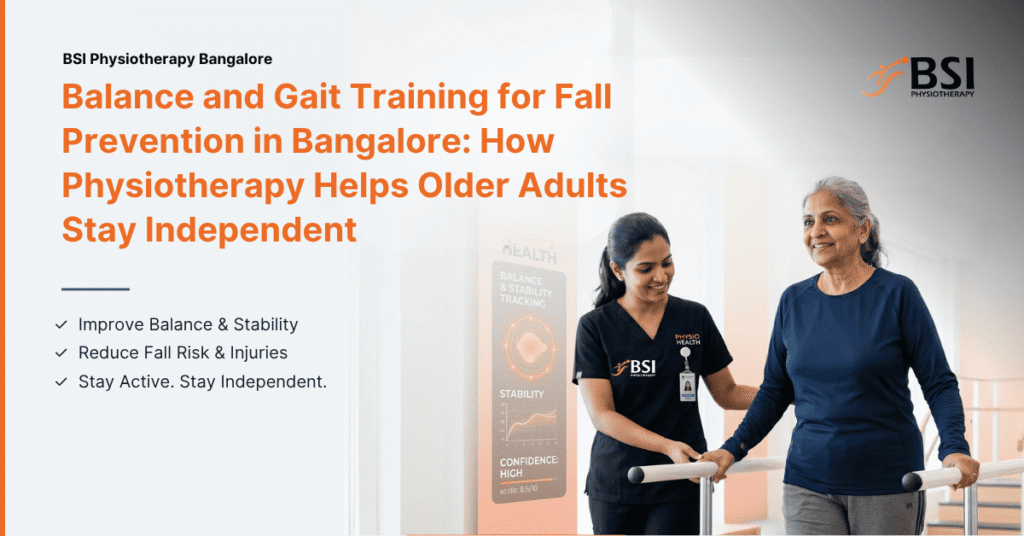
Falls are one of the leading causes of injury, disability, and loss of independence among older adults. While many people assume falls are simply a part of ageing, the truth is that most falls can be prevented with the right intervention. One of the most effective, evidence-based approaches is balance and gait training guided by a qualified physiotherapist.
For families searching for Fall Prevention in Bangalore, choosing a structured physiotherapy program can significantly reduce the risk of falls while improving confidence, mobility, and quality of life. Whether someone has experienced a fall before or has started feeling unsteady while walking, early intervention makes a measurable difference.
If you’re looking for Physiotherapy for Elderly in Bangalore, understanding how balance and gait training works can help you make informed decisions for yourself or your loved ones.
Why Falls Are a Serious Health Concern
According to global health data, approximately one in three adults over the age of 65 experiences a fall each year. Beyond fractures and physical injuries, falls often lead to:
- Fear of walking independently
- Reduced physical activity
- Muscle weakness
- Loss of confidence
- Increased dependence on caregivers
- Higher risk of hospitalization
Many seniors begin avoiding outdoor activities after a fall, creating a cycle where inactivity further weakens muscles and balance, increasing the likelihood of another fall.
Fortunately, this cycle can often be broken through targeted physiotherapy.
What Causes Falls in Older Adults?
Falls rarely occur due to a single reason. Instead, they usually result from multiple contributing factors.
Common causes include:
Age-Related Muscle Weakness
As we age, muscle mass naturally decreases. Weak leg and core muscles make standing, walking, and climbing stairs more challenging.
Poor Balance
The body’s balance system depends on the brain, eyes, inner ear, joints, and muscles working together. Any decline in these systems increases instability.
Changes in Walking Pattern
Shorter steps, slower walking speed, dragging feet, or uneven weight distribution can all contribute to falls.
Joint Problems
Conditions such as osteoarthritis reduce joint mobility and make walking painful or unstable.
Neurological Conditions
Stroke, Parkinson’s disease, neuropathy, and vestibular disorders frequently affect balance and coordination.
Poor Vision
Difficulty seeing obstacles or judging distances increases the chance of tripping.
Environmental Hazards
Loose rugs, slippery floors, poor lighting, uneven pathways, and cluttered homes are common contributors.
What Is Balance and Gait Training?
Balance and gait training is a specialized physiotherapy program designed to improve stability, walking ability, coordination, strength, and confidence.
A geriatric physiotherapist in Bangalore performs a comprehensive assessment before designing an individualized exercise program based on each patient’s needs.
Rather than simply prescribing exercises, physiotherapists identify the underlying reasons behind instability and address them systematically.
Comprehensive Assessment Before Treatment
Effective fall prevention always begins with a detailed evaluation.
The assessment may include:
- Walking pattern analysis
- Balance testing
- Lower limb strength evaluation
- Joint mobility assessment
- Functional movement testing
- Risk factor screening
- Previous fall history
- Medication review (when appropriate)
- Home environment recommendations
This allows the physiotherapist to develop a personalized rehabilitation plan instead of using a one-size-fits-all approach.
How Balance Training Helps Prevent Falls
Balance training focuses on improving the body’s ability to remain stable during daily activities.
Exercises may include:
Static Balance Exercises
Patients learn to maintain stability while standing with different foot positions
Dynamic Balance Training
Activities involve controlled movements while maintaining balance during walking, turning, reaching, and changing direction.
Weight Transfer Exercises
These exercises improve the body’s ability to shift weight safely from one leg to another.
Functional Balance Activities
Physiotherapists simulate everyday tasks such as:
- Getting out of bed
- Standing from a chair
- Climbing stairs
- Reaching overhead
- Picking objects from the floor
These practical exercises directly improve independence at home.
Understanding Gait Training
Gait refers to the way a person walks.
Many elderly individuals unknowingly develop walking patterns that increase fall risk.
Common gait abnormalities include:
- Shuffling steps
- Reduced stride length
- Slow walking speed
- Uneven weight distribution
- Poor foot clearance
- Difficulty turning
Gait training helps correct these movement patterns using structured rehabilitation techniques.
Depending on individual needs, treatment may include:
- Walking re-education
- Step-length correction
- Cadence improvement
- Turning practice
- Obstacle negotiation
- Dual-task walking exercises
- Walking on different surfaces
- Assistive device training when required
Strength Training: A Critical Component of Fall Prevention
Balance alone isn’t enough.
Strong muscles provide the foundation for stable movement.
A Physiotherapist in Marathahalli may incorporate strengthening exercises targeting:
- Quadriceps
- Hamstrings
- Hip muscles
- Gluteal muscles
- Core muscles
- Calf muscles
- Ankle stabilizers
Improved muscle strength enhances reaction time and reduces the likelihood of losing balance during unexpected movements.
Vestibular Rehabilitation When Needed
Some seniors experience dizziness rather than muscle weakness.
In these cases, vestibular rehabilitation may be recommended.
This specialized treatment addresses balance disorders caused by inner ear dysfunction and helps improve:
- Walking stability
- Head movement tolerance
- Visual focus
- Coordination
- Confidence while walking
Confidence Is Just as Important as Strength
One overlooked consequence of falling is the fear of falling again.
Even after physical recovery, many seniors limit their activities because they lack confidence.
Physiotherapy gradually rebuilds confidence through:
- Safe supervised practice
- Progressive exercise programs
- Functional mobility training
- Education on safe movement strategies
- Confidence-building walking exercises
As confidence improves, patients often return to activities they previously avoided.
Home Safety Advice That Complements Physiotherapy
Successful Fall Prevention in Bangalore goes beyond clinic-based treatment.
Physiotherapists frequently recommend practical home modifications, including:
- Removing loose rugs
- Improving lighting
- Installing grab bars in bathrooms
- Using non-slip mats
- Keeping walkways clutter-free
- Wearing supportive footwear
- Organizing frequently used items within easy reach
These simple adjustments significantly reduce environmental risks.
Who Should Consider Balance and Gait Training?
Physiotherapy isn’t only for people who have already experienced a fall.
Early intervention is ideal for anyone who:
- Feels unsteady while walking
- Uses furniture for support
- Walks slower than before
- Has difficulty climbing stairs
- Has arthritis
- Has Parkinson’s disease
- Has diabetes-related neuropathy
- Recently underwent joint replacement surgery
- Has experienced dizziness
- Has fallen within the past year
Addressing these concerns early often prevents more serious complications later.
Why Choose a Geriatric Physiotherapist?
Older adults have unique healthcare needs that differ from younger individuals.
A qualified geriatric physiotherapist in Bangalore understands:
- Age-related movement changes
- Medical complexities
- Safe exercise progression
- Chronic disease management
- Functional rehabilitation
- Individualized fall prevention strategies
Treatment plans are carefully adjusted based on the person’s medical history, fitness level, and goals, ensuring both safety and effectiveness.
The Benefits of Early Physiotherapy Intervention
Starting physiotherapy before a major fall occurs offers numerous long-term advantages.
Patients often experience:
- Better balance
- Improved walking ability
- Increased muscle strength
- Enhanced coordination
- Greater confidence
- Reduced risk of fractures
- Improved independence
- Better quality of life
- Lower likelihood of hospitalization
These benefits extend beyond physical health, supporting emotional well-being and allowing older adults to remain active in their communities.
Why Families in Bangalore Are Prioritizing Fall Prevention
As awareness of healthy ageing grows, more families are proactively seeking Physiotherapy for Elderly in Bangalore to help loved ones stay safe and independent.
Modern physiotherapy focuses not only on rehabilitation after an injury but also on preventing injuries before they occur. Through personalized assessments, evidence-based exercise programs, and practical education, seniors can maintain mobility, confidence, and independence for longer.
Whether it’s improving balance, correcting walking patterns, strengthening muscles, or addressing dizziness, early physiotherapy intervention offers one of the most effective ways to reduce fall risk.
Conclusion
Falls should never be accepted as an inevitable part of ageing. With the right guidance, many falls can be prevented through structured balance and gait training.
If you or a loved one has noticed reduced balance, slower walking, or increasing fear of falling, consulting a qualified Physiotherapist in Marathahalli or an experienced geriatric physiotherapist in Bangalore is a proactive step toward maintaining independence and long-term mobility.
Investing in professional Fall Prevention in Bangalore today can help ensure safer movement, greater confidence, and a healthier, more active future.