
Osteoarthritis vs Rheumatoid Arthritis: Understanding the Difference
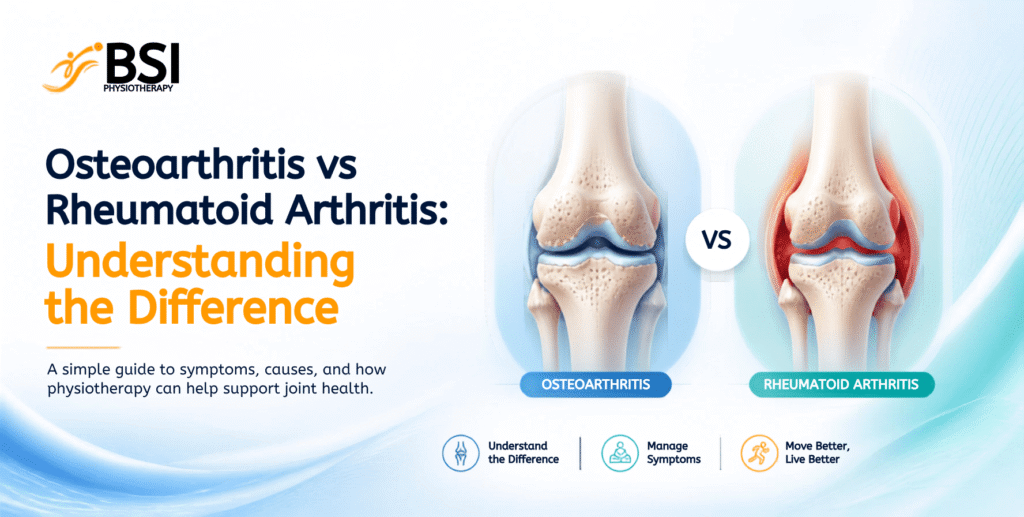
Osteoarthritis vs Rheumatoid Arthritis: Understanding the Difference
Joint pain is one of the most common reasons people seek medical care, but not all arthritis is the same. Two of the most frequently diagnosed conditions are osteoarthritis (OA) and rheumatoid arthritis (RA). Although both can cause joint pain, stiffness, and reduced mobility, they have very different causes, progression, and treatment approaches.
Understanding these differences is important because early diagnosis and the right treatment can significantly improve your quality of life, preserve joint function, and reduce long-term complications.
At BSI Physiotherapy, we regularly work with individuals living with arthritis, helping them reduce pain, improve mobility, strengthen their joints, and stay active through evidence-based rehabilitation. Whether you’re experiencing knee pain, hand stiffness, or difficulty performing daily activities, knowing whether your symptoms are due to osteoarthritis or rheumatoid arthritis is the first step toward effective treatment.
This guide explains the key differences between these two conditions, when to seek medical advice, and how physiotherapy plays an important role in long-term arthritis management.
What Is Arthritis?
Arthritis is not a single disease—it is an umbrella term used to describe conditions that affect the joints. There are more than 100 different types of arthritis, but osteoarthritis and rheumatoid arthritis are among the most common.
Both conditions can lead to:
- Joint pain
- Swelling
- Stiffness
- Reduced movement
- Difficulty with daily activities
However, the underlying causes are very different, which is why accurate diagnosis is essential.
What Is Osteoarthritis?
Osteoarthritis is the most common form of arthritis and is often referred to as a “wear-and-tear” joint condition. It develops when the protective cartilage that cushions the ends of bones gradually breaks down over time.
As the cartilage wears away, bones begin to rub against each other, causing pain, stiffness, and reduced joint movement.
Although aging increases the risk of osteoarthritis, it is not simply a normal part of getting older. Factors such as previous injuries, obesity, genetics, repetitive joint stress, and muscle weakness also contribute to its development.
Commonly Affected Joints
- Knees
- Hips
- Hands
- Spine
- Shoulders
What Is Rheumatoid Arthritis?
Rheumatoid arthritis is an autoimmune disease, meaning the body’s immune system mistakenly attacks the lining of healthy joints (the synovium).
This causes:
- Chronic inflammation
- Joint swelling
- Pain
- Progressive joint damage
Unlike osteoarthritis, rheumatoid arthritis is a systemic condition that can also affect other parts of the body, including the lungs, heart, eyes, and blood vessels.
Early diagnosis and medical treatment are critical to slowing disease progression and preventing permanent joint damage.
Osteoarthritis vs Rheumatoid Arthritis: Key Differences
| Feature | Osteoarthritis | Rheumatoid Arthritis |
|---|---|---|
| Cause | Cartilage degeneration | Autoimmune inflammation |
| Age | Usually after 45 years | Can occur at any age |
| Onset | Gradual | Often develops over weeks or months |
| Joints Affected | Weight-bearing joints | Usually smaller joints first |
| Symmetry | May affect one side | Often affects both sides equally |
| Morning Stiffness | Usually less than 30 minutes | Often more than one hour |
| Swelling | Mild | Significant inflammation |
| Systemic Symptoms | Rare | Fatigue, fever, weight loss possible |
| Progression | Slow | Can progress rapidly without treatment |
Although these differences are typical, only a healthcare professional can confirm the diagnosis through clinical evaluation and appropriate investigations.
Symptoms of Osteoarthritis
People with osteoarthritis commonly experience:
- Joint pain during or after activity
- Stiffness after periods of rest
- Reduced flexibility
- Clicking or grinding sensations
- Mild swelling
- Difficulty climbing stairs
- Reduced walking tolerance
Symptoms usually worsen gradually over time rather than appearing suddenly.
Symptoms of Rheumatoid Arthritis
Rheumatoid arthritis often presents differently.
Common symptoms include:
- Pain in multiple joints
- Swollen joints
- Warmth around affected joints
- Prolonged morning stiffness
- Fatigue
- Low-grade fever
- Loss of appetite
- Difficulty gripping objects
- Joint deformity in advanced stages
RA commonly affects the hands, wrists, and feet before progressing to larger joints.
Why Early Diagnosis Matters
Many people assume persistent joint pain is simply due to aging and delay seeking treatment. This can lead to unnecessary pain and, in some cases, irreversible joint damage.
Early diagnosis allows healthcare providers to:
- Identify the underlying condition
- Begin appropriate medical treatment
- Preserve joint function
- Reduce inflammation
- Prevent complications
- Improve long-term outcomes
If you experience persistent joint pain lasting more than a few weeks, professional evaluation is recommended.
How Is Arthritis Diagnosed?
Diagnosis usually involves a combination of:
- Medical history
- Physical examination
- Assessment of joint movement
- Blood tests (particularly for rheumatoid arthritis)
- X-rays
- Ultrasound
- MRI scans when necessary
Physiotherapists also perform functional assessments to evaluate strength, mobility, balance, walking ability, and movement patterns that influence joint health.
The Role of Physiotherapy in Osteoarthritis
Physiotherapy is widely recommended as a first-line treatment for osteoarthritis by international clinical guidelines.
At BSI Physiotherapy, treatment focuses on helping patients remain active while managing pain effectively.
Your rehabilitation program may include:
Strengthening Exercises
Strong muscles reduce stress on affected joints, particularly the knees and hips.
Range of Motion Exercises
Gentle mobility exercises help maintain flexibility and reduce stiffness.
Balance Training
Improving balance lowers the risk of falls, especially in older adults.
Gait Training
Walking patterns may change due to arthritis. Physiotherapists help improve walking efficiency and reduce unnecessary joint loading.
Weight Management Advice
For individuals with knee or hip osteoarthritis, maintaining a healthy body weight reduces pressure on joints and improves long-term outcomes.
The Role of Physiotherapy in Rheumatoid Arthritis
Although medication is the cornerstone of rheumatoid arthritis management, physiotherapy remains an important part of comprehensive care.
Treatment aims to:
- Preserve joint mobility
- Improve muscle strength
- Reduce stiffness
- Maintain independence
- Improve endurance
- Prevent secondary complications
Exercise programs are carefully adjusted depending on disease activity, ensuring that patients remain active without aggravating inflamed joints.
Lifestyle Changes That Support Joint Health
Managing arthritis involves more than treatment sessions. Daily habits also influence symptoms and long-term joint health.
Stay Active
Regular movement helps reduce stiffness and improves joint nutrition.
Maintain a Healthy Weight
Excess body weight places additional stress on weight-bearing joints.
Follow Your Exercise Program
Consistency with physiotherapist-prescribed exercises leads to better outcomes.
Protect Your Joints
Avoid repetitive strain and use proper body mechanics during lifting and household activities.
Eat a Balanced Diet
While no single diet cures arthritis, nutritious eating supports overall health and helps maintain a healthy weight.
Prioritize Sleep
Good sleep helps the body recover and may reduce pain sensitivity.
When Should You Seek Professional Help?
Consult a healthcare professional if you experience:
- Persistent joint pain lasting more than two weeks
- Swollen joints
- Morning stiffness lasting longer than 30–60 minutes
- Difficulty walking
- Pain that interferes with work or sleep
- Sudden loss of joint function
- Unexplained fatigue with joint pain
Prompt assessment can help identify the cause and initiate the appropriate treatment plan.
Why Choose BSI Physiotherapy for Arthritis Rehabilitation?
At BSI Physiotherapy, we provide individualized rehabilitation programs based on current scientific evidence and internationally accepted clinical guidelines.
Our arthritis care focuses on:
- Comprehensive movement assessment
- Personalized exercise therapy
- Manual therapy when appropriate
- Balance and gait training
- Functional rehabilitation
- Pain management strategies
- Patient education
- Long-term self-management
Whether you’re looking for Physiotherapy in Marathahalli, Physiotherapy in Jayanagar, or Physiotherapy in Whitefield, our experienced physiotherapists work closely with patients to improve mobility, reduce pain, and help them return to meaningful daily activities.
As a trusted Physiotherapy Clinic in Bangalore, we emphasize evidence-based care, patient education, and individualized treatment plans designed around your goals—not just your diagnosis.
Final Thoughts
Although osteoarthritis and rheumatoid arthritis share some symptoms, they are fundamentally different conditions that require different treatment approaches. Osteoarthritis primarily results from the gradual breakdown of joint cartilage, while rheumatoid arthritis is an autoimmune disease that causes ongoing inflammation and can affect the entire body.
The encouraging news is that both conditions can often be managed successfully with a combination of medical care, lifestyle modifications, and structured physiotherapy. Early diagnosis, regular exercise, and individualized rehabilitation can help reduce pain, improve joint function, and support long-term independence.
If you’re living with joint pain, don’t assume it’s simply a part of aging. Seeking professional advice early can make a meaningful difference in your mobility, comfort, and quality of life.
Frequently Asked Questions (FAQs)
1. What is the main difference between osteoarthritis and rheumatoid arthritis?
Osteoarthritis is caused by the gradual breakdown of joint cartilage, while rheumatoid arthritis is an autoimmune condition in which the immune system attacks healthy joint tissues, leading to inflammation.
2. Can physiotherapy help both osteoarthritis and rheumatoid arthritis?
Yes. Physiotherapy plays an important role in managing both conditions by improving joint mobility, increasing muscle strength, reducing stiffness, and helping patients maintain independence.
3. Which arthritis is more painful?
Pain varies from person to person. Rheumatoid arthritis often causes more inflammation and prolonged morning stiffness, while osteoarthritis pain is typically related to joint use and mechanical wear.
4. Is walking good for arthritis?
Yes. Walking is generally recommended for many people with arthritis because it helps maintain joint mobility, muscle strength, and overall fitness. The intensity and duration should be individualized based on symptoms.
5. Can exercise worsen arthritis?
Appropriately prescribed exercise is safe and beneficial for most individuals with arthritis. High-impact or unsuitable exercises, however, may aggravate symptoms. A physiotherapist can recommend the most appropriate program.
6. Is arthritis curable?
Currently, there is no cure for osteoarthritis or rheumatoid arthritis. However, early diagnosis, medical management, physiotherapy, and healthy lifestyle habits can effectively control symptoms and improve quality of life.
7. How do I know if my joint pain is arthritis?
Persistent joint pain, stiffness, swelling, reduced movement, or pain that interferes with daily activities should be evaluated by a healthcare professional for an accurate diagnosis.
8. Which physiotherapy clinic in Bangalore provides arthritis rehabilitation?
When choosing a clinic, look for experienced physiotherapists who provide comprehensive assessments, evidence-based treatment, personalized exercise programs, and long-term rehabilitation. BSI Physiotherapy offers arthritis rehabilitation services at its centres in Marathahalli, Jayanagar, and Whitefield.