
Ehlers-Danlos Syndrome Explained: How Movement Therapy Makes a Difference
Ehlers-Danlos Syndrome (EDS) is a group of rare inherited connective tissue disorders that primarily affect the skin, joints, and blood vessels. Among the many challenges faced by individuals with EDS, joint hypermobility, chronic pain, fatigue, and frequent joint dislocations are some of the most debilitating. In recent years, physiotherapy for Ehlers-Danlos Syndrome has emerged as a core non-invasive treatment modality that focuses on joint stabilization, pain management, posture correction, and improving functional mobility.
In this blog, we’ll explore the clinical understanding of EDS, the importance of movement therapy, and how physiotherapy makes a tangible difference in the lives of EDS patients, both in India and the United States.
Understanding Ehlers-Danlos Syndrome
EDS is caused by genetic mutations affecting the production of collagen, an essential protein that gives strength and elasticity to the connective tissue. This defect results in tissues that are overly flexible but structurally weak, leading to:
- Joint Hypermobility
- Skin Hyperextensibility
- Chronic Musculoskeletal Pain
- Frequent Joint Dislocations or Subluxations
- Fatigue and Poor Posture
There are several subtypes of EDS, but the hypermobile EDS (hEDS) is the most commonly associated with joint instability and recurrent injuries which are areas where physiotherapy plays a crucial role.
Physiotherapy for Ehlers-Danlos Syndrome: Why It Matters
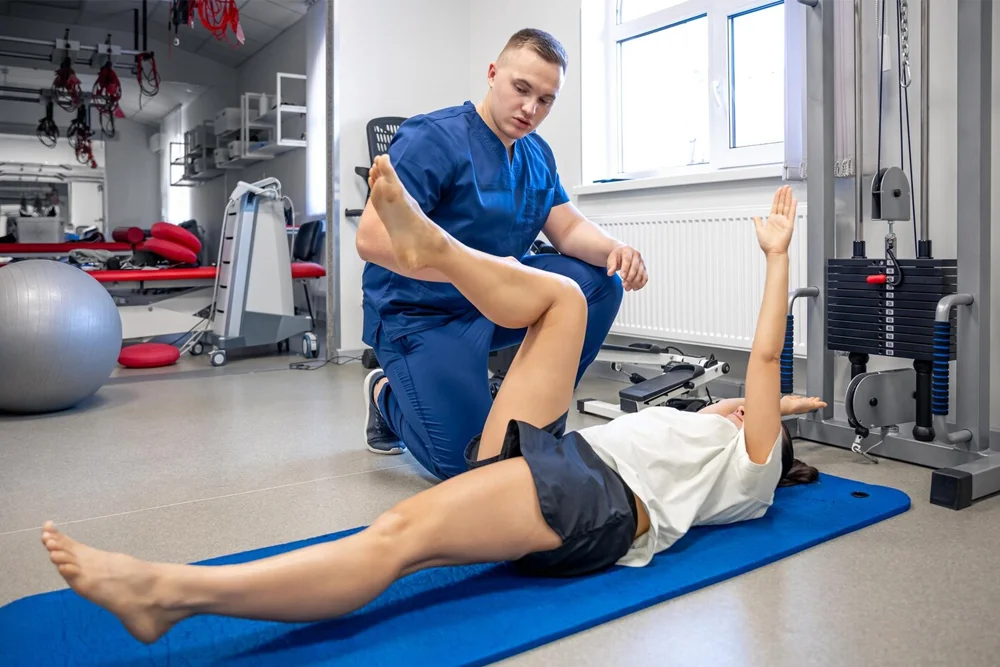
Physiotherapy is a cornerstone of EDS management and focuses on addressing the neuromuscular and biomechanical complications of the condition. Rather than relying on medications or surgical interventions, movement therapy empowers patients with functional independence and long-term symptom relief.
Here’s how physiotherapy helps in EDS:
1. Joint Stabilization Techniques
Due to connective tissue laxity, joints in EDS patients often lack the structural integrity to stay aligned. A well-trained physiotherapist will implement joint stabilization techniques, including:
- Isometric strengthening of muscles surrounding unstable joints
- Closed kinetic chain exercises
- Functional bracing strategies
These strategies reduce the risk of joint dislocations and subluxations significantly.
2. Safe Exercises for EDS Patients
Unlike general workout routines, EDS exercise programs are carefully curated to avoid hyperextending or stressing joints. A tailored plan may include:
- Pilates-based strengthening
- Low-impact resistance training
- Hydrotherapy sessions
- Proprioception training (to improve body awareness and joint control)
3. Postural Correction for EDS
Poor posture is a common issue among EDS patients, often leading to secondary pain syndromes such as:
- Cervicogenic headaches
- Thoracic outlet syndrome
- Back and shoulder pain
Postural training and ergonomic correction through physiotherapy reduces mechanical stress on the joints and helps in improving spinal alignment.
4. Fatigue Management and Energy Conservation
People with EDS often report chronic fatigue, even after minimal physical activity. Physiotherapists educate patients on:
- Pacing techniques
- Energy conservation strategies
- Breathing and relaxation techniques
This improves day-to-day functionality without triggering symptom flare-ups.
Evidence-Based EDS Physiotherapy Approaches
Clinical research from both India and USA supports that early physiotherapy intervention in EDS patients improves mobility, proprioception, and quality of life. A multidisciplinary approach including rehabilitation protocols, proprioception enhancement, and neuromuscular training shows long-term positive outcomes.
Some studies also highlight the importance of strengthening deep core stabilizers and biofeedback-assisted therapy to improve motor control and reduce compensatory movements.
Physical Therapy Plan for Ehlers-Danlos Syndrome: What to Expect
A comprehensive EDS physiotherapy treatment plan usually includes:
- Assessment of Joint Mobility & Muscle Function
- Postural Analysis & Movement Screening
- Progressive Muscle Strengthening Protocol
- Manual Therapy (if required)
- Education on Lifestyle, Ergonomics, and Joint Protection
At BSI Physiotherapy, we also use modern techniques like dry needling, kinesio taping, and neurodynamic exercises based on individual assessments.
Local and Global EDS Care: India vs USA
If you are searching for EDS treatment near me, it’s important to choose a physiotherapy clinic that has experience in connective tissue disorders.
- In India, specialized centers like BSI Physiotherapy in Bangalore offer evidence-based protocols for joint hypermobility management and EDS-specific rehabilitation.
- In the USA, awareness is growing, and physical therapy for EDS is included in integrative pain management and genetic disorder clinics.
Patients in Bangalore, India, can benefit from cost-effective, high-quality, and customized care a growing appeal even among international patients seeking medical tourism physiotherapy for EDS.
Conclusion
Living with Ehlers-Danlos Syndrome is challenging, but it doesn’t have to limit your life. With the right movement therapy and physiotherapy plan, you can regain strength, prevent injuries, and live more independently. Whether you’re in India or the USA, understanding the power of physiotherapy in managing EDS is the first step toward better health.
📞 Need Help?
If you or your loved one is looking for the best physiotherapy clinic in Bangalore. Reach Us.
Frequently Asked Questions
Yes, when supervised by a trained physiotherapist, movement therapy is both safe and essential for EDS management.
Yes, joint stabilization exercises and proprioception training can reduce the frequency and severity of joint dislocations.
BSI Physiotherapy offers advanced, personalized EDS physiotherapy plans at multiple locations across Bangalore.